



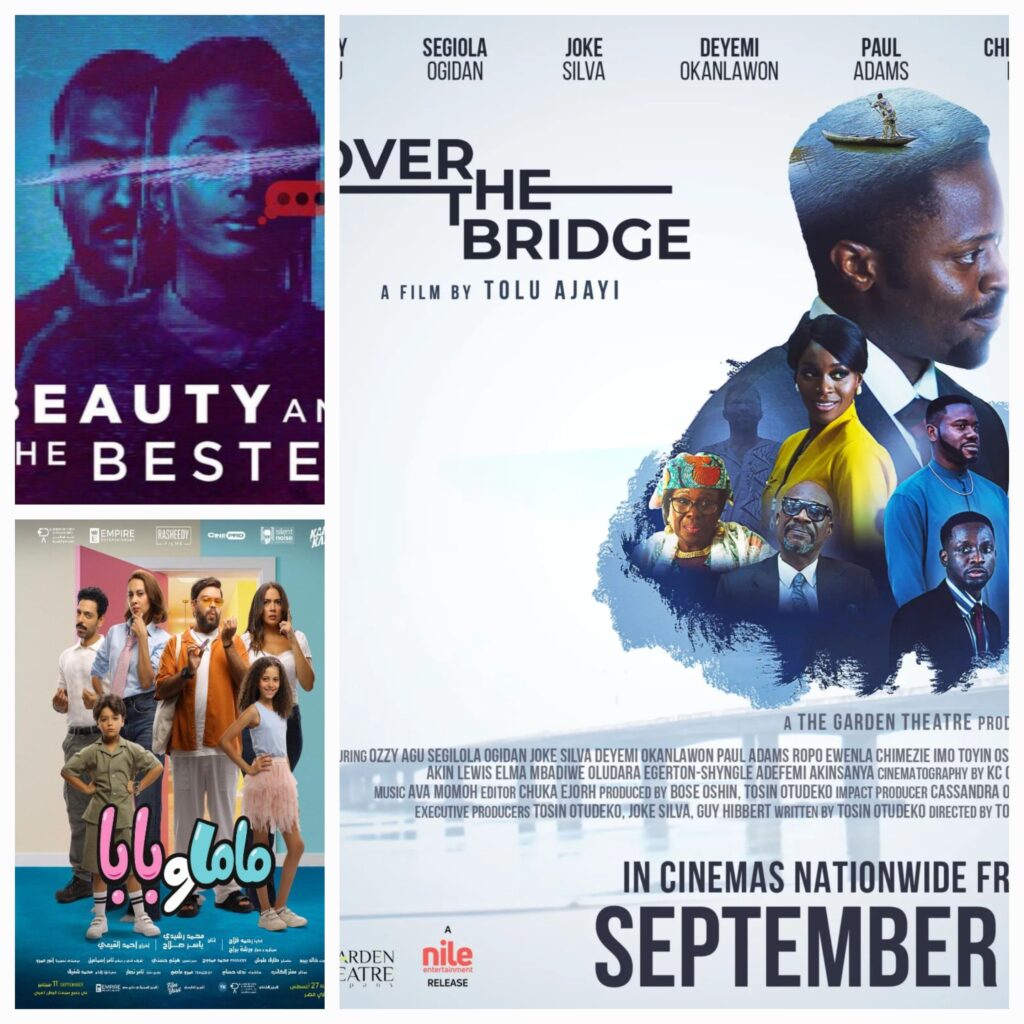
September gave everything!!!! I mean there was something for everyone! whether you love magical comedies, stirring dramas, films with talking animals, or a series examining the rise and fall of a real-life celebrity-couple, SEPTEMBER got people covered!!!!! Meanwhile, in Egypt, a local cinema’s annual program brings the latest Arab Productions from across the regions, offering a exhilarating “Slew of films” which produced an enjoyable summer for our viewers.
From magical comedies to crime documentaries and stirring dramas,
INTALKS.AFRICA explores the recap of Africa’s Best SEPTEMBER releases from Cairo’s indie gems to Bold South-African series on love, loss and identity.
1] ‘BEAUTY AND THE BESTER’ (SOUTH AFRICA)
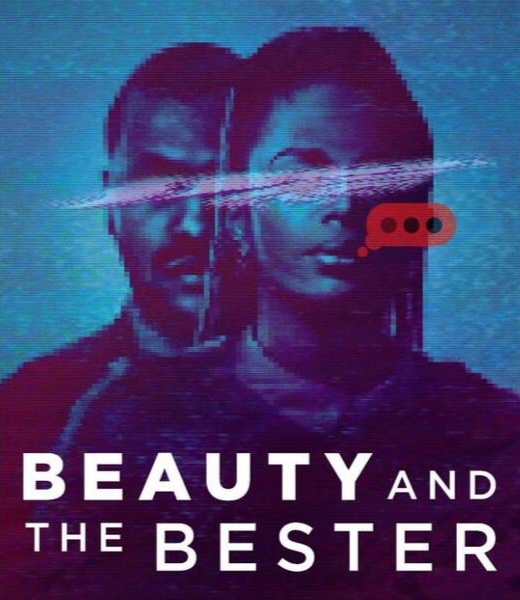
‘Beauty and The Bester’ is a three-part series that examines the rise and dramatic fall of Dr. Nandipha Magudumana, once celebrated as a glamorous celebrity doctor and enterpreneur. Her carefully “crafted image” collapsed when her relationship with convicted rapist and murderer Thabo Bester was exposed, thus placing her at the heart of one of South Africa’s most sensational scandals.
BEAUTY AND THE BESTER retraces the events that gripped the nation in 2023. From “staged celebrity appearances” and “lavish living to Bester’s shocking escape from Mangaung Maximum Prison Security”, the story spiraled into Chaos after a viral photo did showed the pair shopping at Sandton City. What followed was a Nation-wide Manhunt that finally resulted to a conclusive end with their arrest in Tanzania and extradition back to South-Africa.
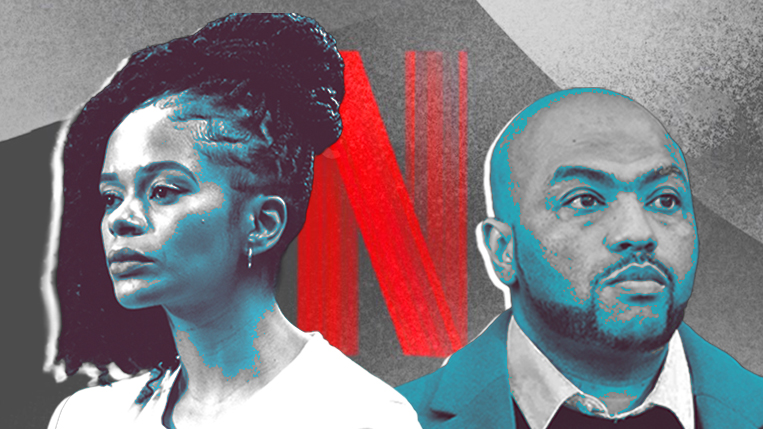
Since it was released on September 12, Netflix’s true crime documentary series Beauty and the Bester has captured global attention with its chilling examination of one of South Africa’s most notorious criminal cases. The three-episode documentary series examines the enigmatic ties that bound convicted killer Thabo Bester and celebrity doctor Nandipha Magudumana, exploring a story so outrageous it beggars belief.
The documentary delves into a case that stunned South Africa when a sudden prison fire took the life of the notorious criminal, but the subsequent investigation quickly revealed that foul play was suspected. What unfolded was a tale of deception, romance, and one of the most audacious prison escapes in recent history.
Despite legal challenges from the subjects themselves, Bester and Magudumana, who both sought to prevent the documentary’s release claiming it contains defamatory content and would portray Bester as an ‘inhuman beast’, the documentary proceeded to air — and is currently sitting at the top of the Netflix charts in the UK, offering viewers unprecedented insight into this extraordinary criminal case.
Who is Thabo Bester?
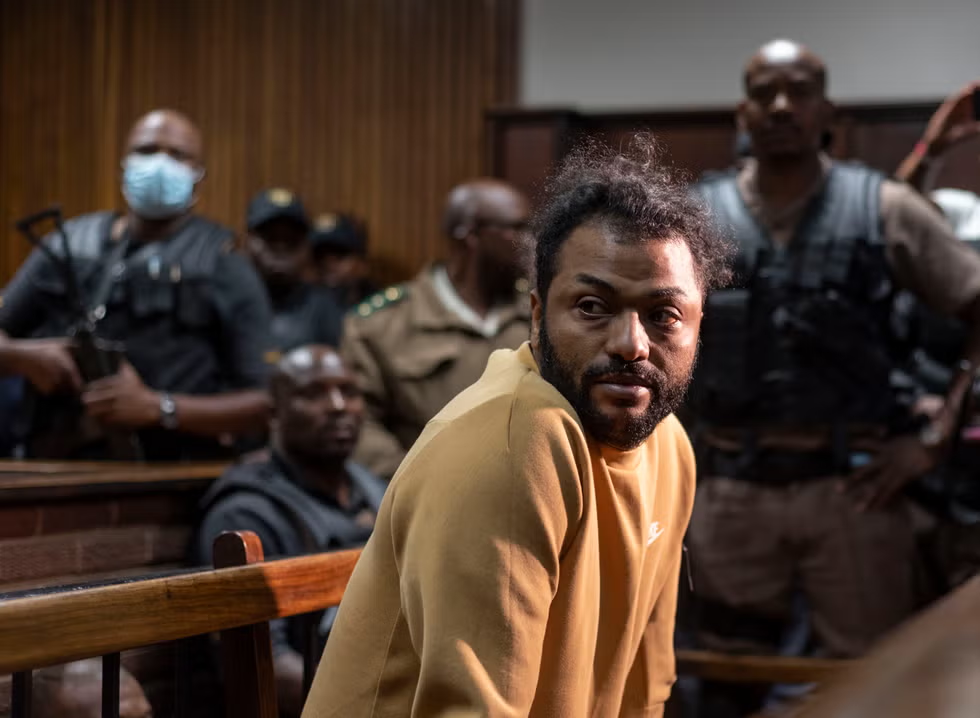
Thabo Bester was born at the Chris Hani Baragwanath Hospital in Soweto, South Africa on 13 June 1986. He became infamously known as the ‘Facebook Rapist’ due to his method of targeting victims through social media platforms. Bester gained notoriety not only for his crimes but also for his allegedly sinister charm and intelligence, which he manipulated to deceive both victims and authorities.
Bester is arguably among South Africa’s most notorious con men, whose criminal activities allegedly extended far beyond his most publicised offenses. His ability to manipulate situations and people would later prove crucial in orchestrating one of the most elaborate prison escape schemes in South African history.Gallo Images
The documentary reveals how Bester’s criminal behaviour escalated over time, showing a pattern of violence and deception that would ultimately lead to his conviction for the most serious crimes in the South African legal system.
What was Thabo Bester jailed for?
Bester pleaded guilty to two rapes and one murder and was sentenced to life imprisonment in 2017. His crimes were particularly heinous, involving the systematic targeting of vulnerable women through social media platforms.
These guilty pleas led to his ultimate conviction and sentencing, with Bester being incarcerated at the Mangaung Correctional Centre in Bloemfontein, South Africa. The life sentence was intended to ensure public safety and remove him from society permanently.
The documentary details reveals the true extent to how Bester used social media to build trust with his victims before luring them into situations where he could commit his crimes.
How did he escape?
The escape that shocked the nation involved an elaborate scheme that investigators are still piecing together.
In 2022, Bester was declared dead after a fire broke out in his cell at Mangaung Correctional Centre in the early hours in the morning. At the time, Bester was in isolation, with the body found charred beyond recognition. While the body was initially claimed to be Bester, a post-mortem found some discrepancies. Firstly, the body that was found was 1.4m, while Bester was thought to be 1.7m.
This elaborate deception allowed him to escape from the maximum-security facility undetected for months. Undetected for a year, Bester then allegedly lived under an alias in South Africa’s main city, Johannesburg, helped by his partner, Dr. Nandipha Magudumana, a respected medical professional.
South African authorities subsequently took over management of the maximum-security prison run by a private British security firm after the high-profile convicted murderer was accused of faking his own death in a fire, then escaping to live openly with his doctor girlfriend. The documentary revealed the intricate planning involved in the escape and raises serious questions about prison security and oversight at privately managed correctional facilities.
Where is Thabo Bester now?
Thabo Bester gained global notoriety in 2023 after his arrest in Tanzania, a year after the dramatic escape from the private prison. His recapture ended months of speculation about his whereabouts and confirmed suspicions that his death had been fabricated.
Following his arrest in Tanzania alongside Dr. Magudumana, Bester was extradited back to South Africa to face justice. He now faces separate charges, including for his escape, which will be added to his existing life sentence.
Bester currently remains in custody in South Africa, where he continues to face legal proceedings related to his escape and the various individuals who allegedly assisted him. The case has had far-reaching implications for South Africa’s correctional system, leading to investigations into prison management and security protocols.
Cinematic View: NETFLIX
2] ‘BLACK GOLD’ (SOUTH AFRICA)
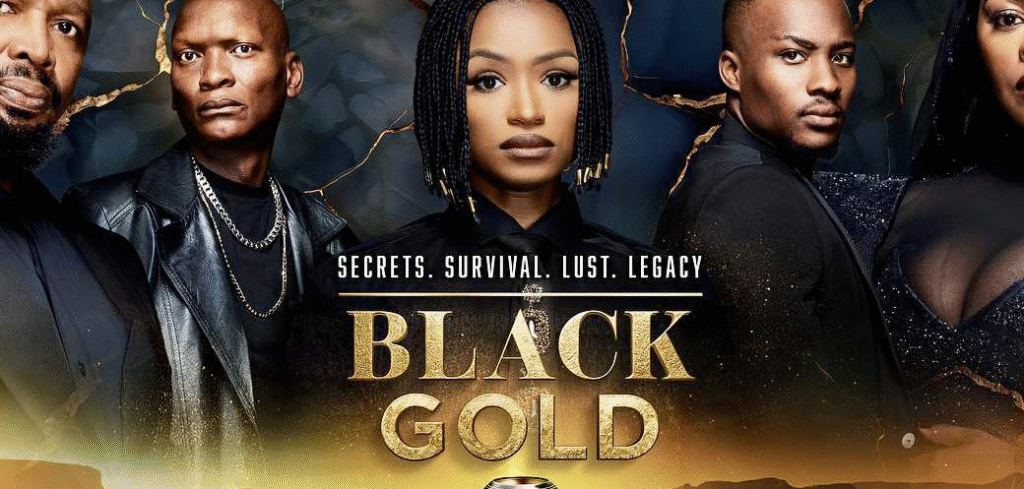
Nomalanga Shozi makes her debut in an exhilarating leading role where she flourished in the new daily drama BLACK GOLD. She stars as Amandla zungu, a young woman cast out of her ancestral home after being accused falsely of her Father’s Murder. Amandla must fight her way back from the perilous world of “mining to reclaim her legacy” and face the woman who destroyed her life. The Cast includes SAFTA Winner- Dawn Thandeka King as Florence, Amandla scheming step-mother and also SAFTA nominee- Sello Maake KaNcube as Tom Motsepe, Florence’s secret partner-in-crime. The drama also features Two SAFTA Winners- Warren Masemola and Thulani Mtsweni, both along with Mbali Ngiba, known for her role in Real Housewives of Durban.
Black Gold is a South African television drama series created by Mandla N and Mpumelelo Nhlapo. It is an BET original series produced by BlackBrain Pictures. The series is the Chanel’s 5th South African telenovela. GQ reviews express explore of power, betrayal, and bloodlines in a gripping telenovela.
On 4 November 2025, it was announced that filming for Black Gold had been completed, as Paramount’s African offices were closing in December 2025.
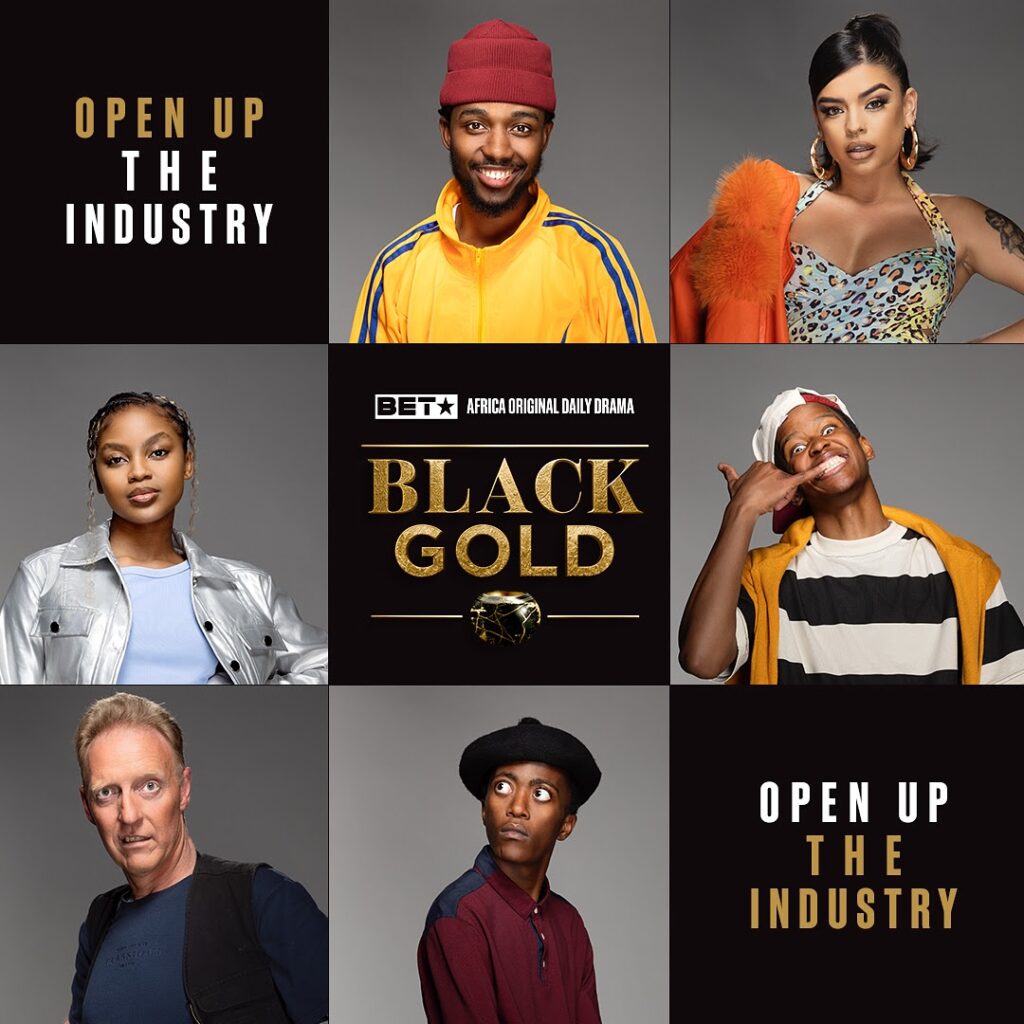
Black Gold is a South African telenovela that centres around Amandla Zungu, a principled and passionate daughter of the soil, whose life is shattered when her beloved father is murdered, and she is falsely accused of the crime by her stepmother.
The story follows her journey to reclaim her power, legacy and land.
At its heart, the series asks: what if a woman, betrayed and stripped of everything, had to become as ruthless as her enemy to reclaim her rightful place – only to discover that power, once seized, is a force as corrupting as it is intoxicating?
Can Amandla outmanoeuvre the woman who stole everything from her, or will Florence tighten her grip and crush Amandla beneath the very land she once vowed to protect?
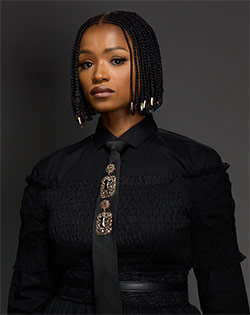
Set in the heart of KwaZulu-Natal, Black Gold follows the journey of Amandla Zungu (Nomalanga Shozi).
Amandla is cast out of her ancestral home after being falsely accused of her father’s murder.
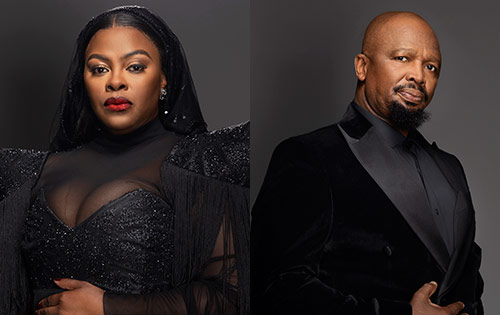
Her stepmother, Florence (Dawn Thandeka King), orchestrates the betrayal, while Sello Maake Ka-Ncube stars as Tom Motsepe, Florence’s secret lover and co-conspirator.
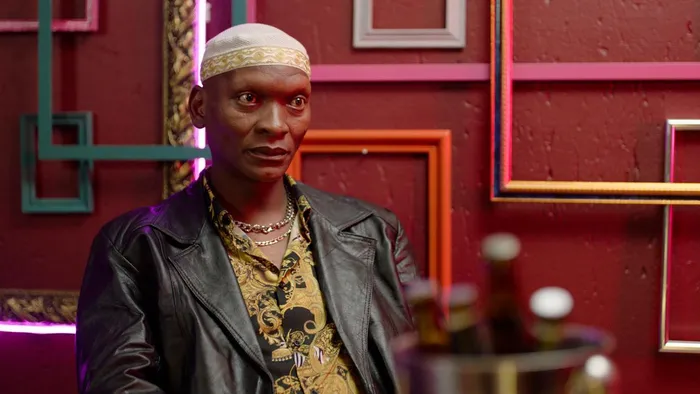
Black Gold actor, Warren Masemola
Black Gold also champions empowering female narratives, featuring strong women who navigate and challenge the male-dominated worlds of mining and business.
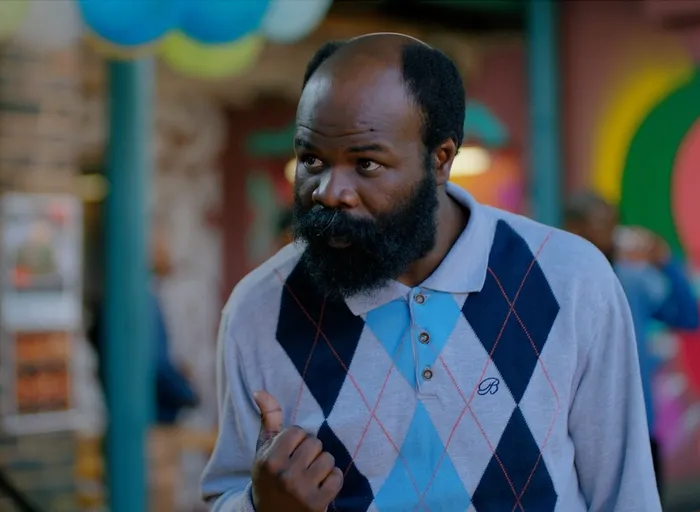
Black Gold actor, Thulani Mtsweni
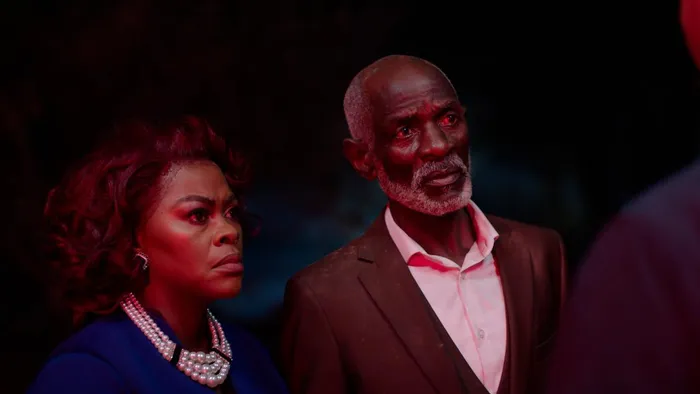
Main actors on Black Gold, Thandeka Dawn King & Ernest Ndlovu
The Story
A young woman’s world crumbles under betrayal, forcing her into a dangerous fight for justice in Black Gold. This heartfelt drama, rich in Black pride, premieres on BET Africa on August 18, 2025.
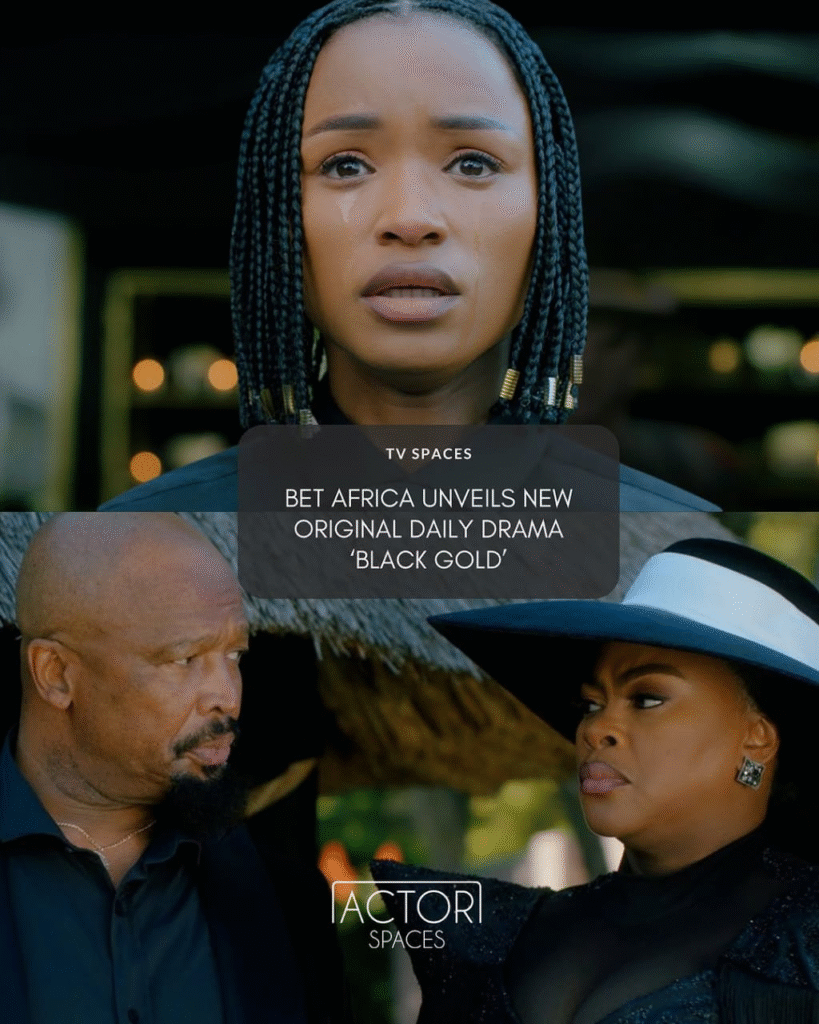
In the rolling hills of KwaZulu-Natal, Black Gold unfolds a story of resilience and retribution that feels both personal and universal. Co-produced by Black Brain Pictures and BET Africa, the series follows Amandla Zungu, brought to life by Nomalanga Shozi in her first lead role. Amandla, a woman of strong principles, faces a shattering injustice when she’s wrongfully accused of her father’s murder and exiled from her family home. Her stepmother, Florence, played by the formidable Dawn Thandeka King, schemes with her lover, Tom Motsepe, portrayed by Sello Maake KaNcube, to orchestrate this betrayal. Thrust into the gritty underworld of illegal mining, Amandla’s journey becomes a fierce quest to reclaim her legacy and confront those who stripped her of everything.
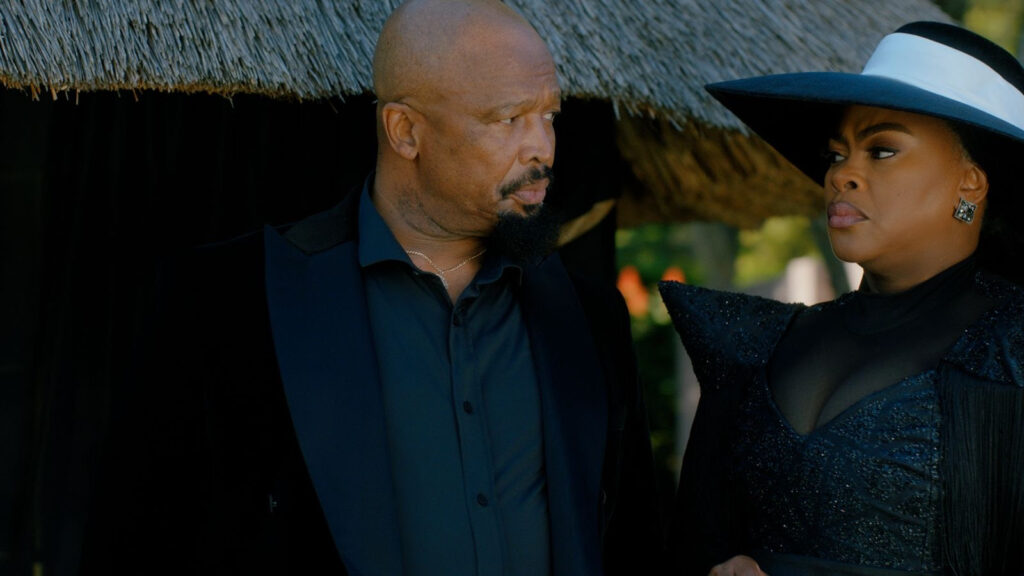
The series, airing Monday to Thursday at 18:30 on DStv Channel 129, blends high-stakes drama with moments of Black joy and love, as noted by producer Mandla N. “Black Gold shook us as much as it will shake the audience,” he said, praising the cast’s ability to breathe life into the story. Shozi’s raw portrayal of Amandla captures a woman’s unyielding spirit, while King and Maake KaNcube, described as “royalty” in South African acting, deliver performances that lend emotional weight to the series.
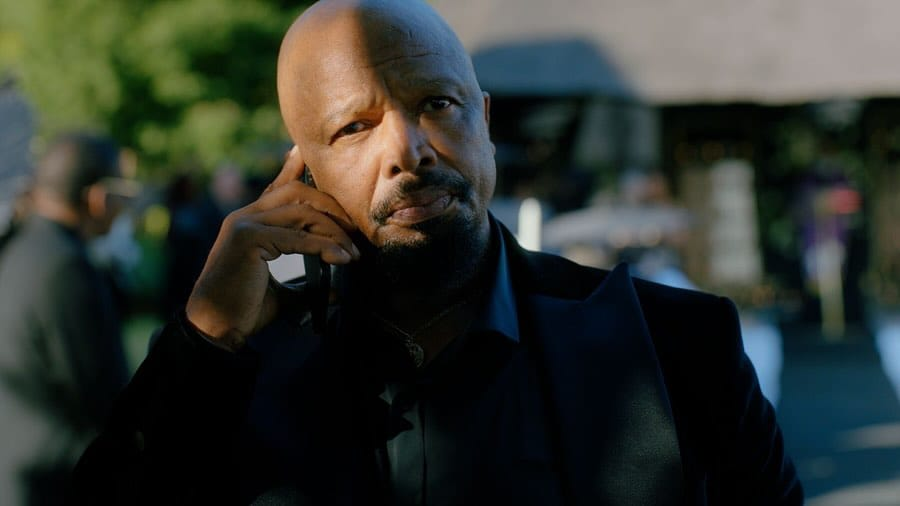
The KwaZulu-Natal setting adds a vivid layer, reflecting the region’s beauty and struggles. Black Gold stands out for its authentic storytelling, weaving cultural pride with themes of family and justice, making it a fresh addition to BET Africa’s lineup of bold narratives.
In Summary
Black Gold was launched on BET Africa (DStv Channel 129) on August 18, 2025, with Nomalanga Shozi’s powerful debut as Amandla, a role that showcases her as a rising star in South African drama. Tune in to witness this moving tale of betrayal and redemption.
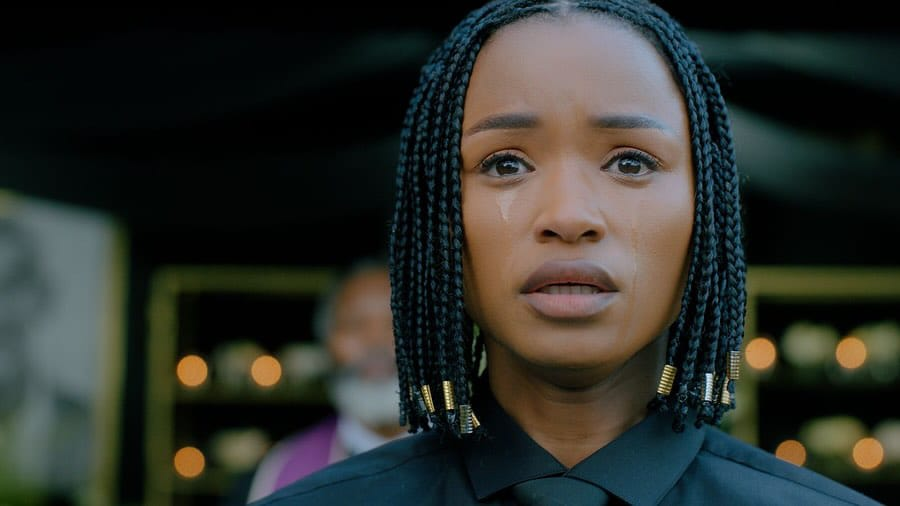
From Amandla’s rise as a revolutionary to Florence’s ruthless grip on power, the series highlights the resilience, complexity and strength of women in the face of adversity.
The supporting cast includes Zamani Mbatha as Zakhele Motsepe, a conflicted heir torn between love and legacy.
Nomsa Buthelezi plays MaBrrr, a brothel queen with a sharp tongue and a haunted past.
Warren Masemola plays the role of Kotsi, a rebel leader whose intellect is as dangerous as his rage.
Ernest Ndlovu portrays Bhekumbuso Zungu, the visionary patriarch whose murder ignites the central conflict.
Other cast members include Ashleigh Herman as Starlight, a glamorous hostess with a mysterious past.
Zinhle Sithole portrays Abongwe Zungu, a sharp-witted teen navigating grief and rebellion.
Siphesihle Vazi appears as Ma-a Motsepe, a flashy party boy with a hidden yearning for purpose, while Thulani Mtsweni is Majika, the loyal supervisor of The Ch!las Lounge.
The cast also includes Lwazi Dlamini as Siyabonga Zungu, Mbaliyesizwe Ngiba as Faith Motsepe, Warren van Rooyen as Detective Scheepers, Skhulile Mgaga as Bancane, Francois Jacobs as Twakkie, Robert Wood as Kobie and Michelle Ayden as Susana.
Black Gold was created by Mandla N and Mpumelelo Nhlapo and is co-produced by Black Brain Pictures and Paramount.
The executive producers are Mpumelelo Nhlapo, Mandla N and Annelie van Rooyen; the series producer is Siphiwe Hlabangane.
The head writers and storyliners are Sayitsheni Mdakhi and Lunga John Radebe, with a writing team including O’Tsepo Ya Rona Mamatu, Glenrose Ndlovu-Udeh, Ismerelda Tsaletsing Makam, Rami Zakany, Nombulelo Mcwera and Molaontoa Philbeth Diaho.
The head director is Mandla N and the music is by Black Brain Pictures.
Cinematic View: SHOWMAX
3] ‘GUSH’LYF’ (SOUTH AFRICA)
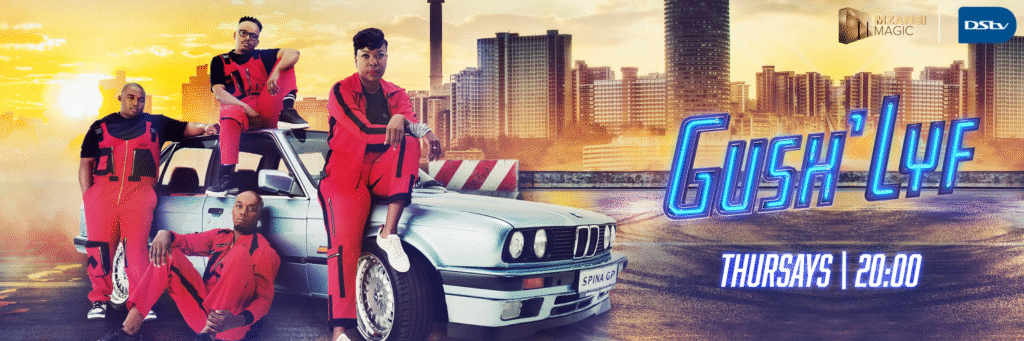
‘GUSH’LYF’- drawn from gusheshe (yes!! gusheshe is what BMW cars are referred to in SOUTH AFRICA)- is a new reality show that takes viewers into a high-octane world of car spinning, where the spot is a “lifestyle”, and “a stage for identity”. The show follows “four bold spinners” as they prepare for the Country’s biggest national showdown, balancing the thrill of the arena with the pressures of everyday life. Gift Zulu bears the Nigerian name “Ngozi”, Daniel Darlie also known as the “Queen of Smoke” bears the name Nalo Dzhivhuho, Mpho Diloro bears the name “Poroza” while Collie Golden bears the name Mzet also called Moruti, each brings their own story, ambition and drive.

“GUSH’LYF” is the name of a popular South African reality television series that explores the high-octane world of car-spinning and the intimate personal lives of the drivers involved. It is not a general lifestyle brand or business in the typical sense.
Gush’Lyf Reality TV Show
- Content: The show dives into South Africa’s vibrant and raw “kasi” (township) car spinning culture, which involves performing stunts, such as driving cars at high speed in circular motions and getting in and out of moving vehicles.
- Platform: The series premiered in August 2025 and airs on the Mzansi Magic channel (DStv channel 161) in South Africa.
- Cast: It features four main expert spinners: Gift Zulu (Ngozi), Nalo Dzhivhuho (Dankie Darlie, the “Queen of Smoke”), Mpho Diloro (Poroza), and Collie Golden (Mzet).
- Themes: Beyond the stunts, the show uncovers the drivers’ personal stories, struggles, family dynamics, and dreams, blending the adrenaline-fueled action with authentic, real-life narratives.

Meet the Gush’lyf Crew:
- Ngozi (Gift Zulu) – A soft-spoken drifter balancing fatherhood with a desire to heal from the trauma of his past. As he skids toward reconnection with his ancestors, he dreams of returning to school and rewriting his story.
- Dankie Darlie aka Queen of Smoke (Nalo Dzhivhuho) – She’s the first lady of spinning and a fierce entrepreneur. Spinning is her lifeline, not a hobby. A widow seeking the truth behind her husband’s mysterious death in 2015, her every stunt carries the weight of resilience and unanswered questions.
- Poroza (Mpho Diloro) – A man of many gears, he archives history by day and rewrites his own by night. Chasing a legacy wrapped in burning tyres and unanswered family heritage, Poroza lives life without brakes.
- Mzet aka Moruti (Collie Golden) – A former car thief turned spiritual spinner. He’s traded in his outlaw past for a purpose-driven path, turning each drift into a sermon of redemption and protection.
What to Expect:
Gush’lyf dives deep into the heart of kasi car culture, following these trailblazers from local showgrounds to personal battlegrounds. With every spin, there’s emotional smoke — moments of triumph, family reconnection, grief, and the relentless hustle of making a name in a gritty, fast-paced world.
More than just smoke and steel, this is life on the edge — kasi culture in motion, with stories that grip as hard as the tyres on the tar.
Prepare to witness them execute a perfect roll back into the kitchen or pull off an insane 720 cray flip. You’ll see them push their rides through a full lap until the tyres blow, and maybe even do a heart stopping bonnet flip. Gush’Lyf explores the world of Gusheshe fans who live for the thrill, the smoke, and the crowds’ roar, while privately navigating their personal and family lives and challenges.
Rev your engines for a thrilling ride into South Africa’s car spinning culture with ‘Gush’lyf’
As we wait for the first episode on Thursday, let’s get you ready with the lingo the crew uses in Gush’lyf:
Roll back
When a car is moving forward and is suddenly whipped 180 degrees. The momentum sends it into a reverse motion without selecting the reverse gear.
Kitchen
A small, demarked part of the skidpan that is narrow like a driveway. So, one would say rollback into the kitchen.
Lap/round
When a spinner goes into the skidpan/pitch to perform tricks until one or two of their tyres blow or pop.
Crazy flip/360/720
When a vehicle is moving forward quickly and whipped around 360 degrees and continues facing the original direction it was facing. It’s called a 720 is if this done twice or two crazy flips. Cars can do more “flips”.
Bonnet flip
When the bonnet opens during a crazy flip.
Sjangalala
A 1990s BMW E34 5 series body shape, also known as the dolphin shape.
Botsotso
Another name for a 1990s BMW E30 body shape.
M20
The original factory single overhead camshaft 6-cylinder engine released with the BMW E30 designed in the 1970s.
Multivalve
Double overhead camshaft, 6-cylinder engine released in the 1990s. Preferably the M50, M52 and sometimes the M54 engine codes are used for spinning.
VQ25 and 35
Nissan V6 engines popularly released with the 350z, 370z, Murano. Recently popularly used for spinning.
V8 In Spinning, the Lexus/Toyota Prado/ Landcruiser 1uz and 3uz engines are used.
4/100
14-inch spin rim. Be sure not to miss the premiere…it’s a whole kasi culture on wheels!
The term “Gush’Lyf” often refers to the specific car spinning lifestyle depicted in the show.
Cinematic View: SHOWMAX
4] ‘AMLAN’ (CÔTE D’ IVOIRE)
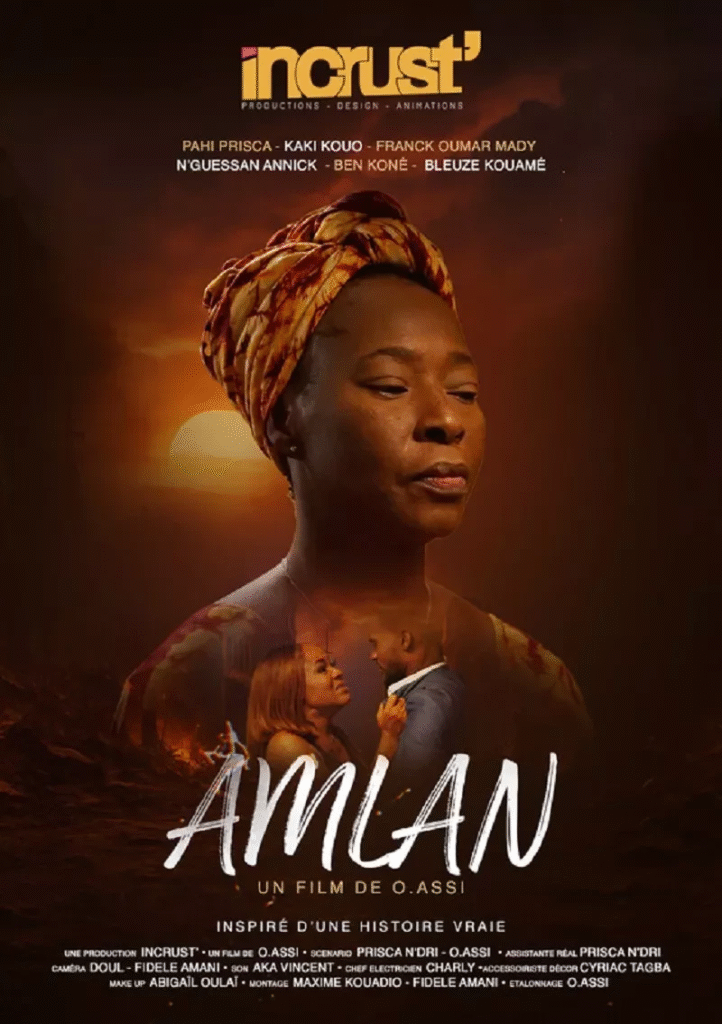
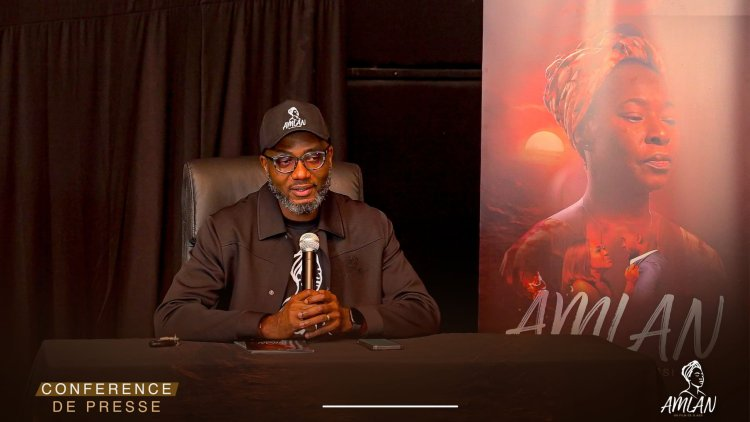
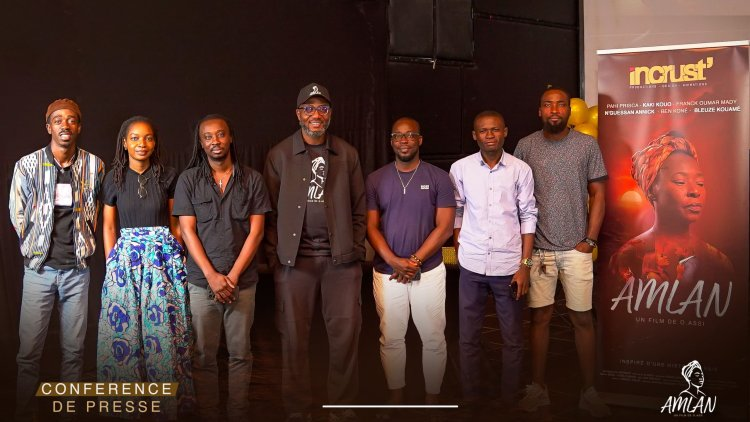
Directed by O. ASSI, ‘AMLAN’ is a story of love and desperation that can emerge as the protection unfolds. The film follows Amlan, a governess who becomes the only safe space for a child she is looking after as her family topples into crisis. Amlan is forced, as the conflicts surrounding her and the child explodes, to come to terms with how far she is willing to protect someone she has grown to love from the kind of tragedy that once plagued her. The film stars Prisca Pahi, Kaki Kouo, Franck Oumar, Mary and others.
“Amlan” in Côte d’Ivoire refers to a notable N’Guessan Amlan Monique a co-producer featured in projects like PROMIRE for her work in sustainable agriculture. Amlan is a widow who has successfully used agroforestry techniques to improve her cocoa plantation’s yield and quality, while also advocating for other women farmers.
- Sustainable agriculture: Amlan participated in the PROMIRE project, which involved planting forest and fruit trees on her cocoa farm. This has resulted in higher cocoa yields and improved quality, which is important for international buyers who are increasingly focused on sustainability.
- Agroforestry: By planting trees, Amlan has established a more climate-resilient farm. The project has helped her plantation “perk up,” and she sees it as a way to provide a better future for her children.
- Advocacy: Amlan has become an advocate for other women farmers, sharing her story to raise awareness about the challenges they face and to encourage them to join sustainable farming projects. She hopes to help create fairer conditions for farmers and ensure a sustainable future for communities.
- A Project Beneficiary: N’Guessan Amlan Monique is a cocoa farmer featured in a Food and Agriculture Organization (FAO) project (PROMIRE) that promotes climate-resilient agroforestry practices in Côte d’Ivoire. Her story is highlighted as a success in improving cocoa yields and sustainability.
“Amlan” itself is not a specific place name for a major city or region, but rather a personal name associated with various individuals and cultural projects within the country.
Cinematic View: MAJESTIC CINEMA, ABIDJAN
5] ‘THE FISHERMEN’ (GHANA)
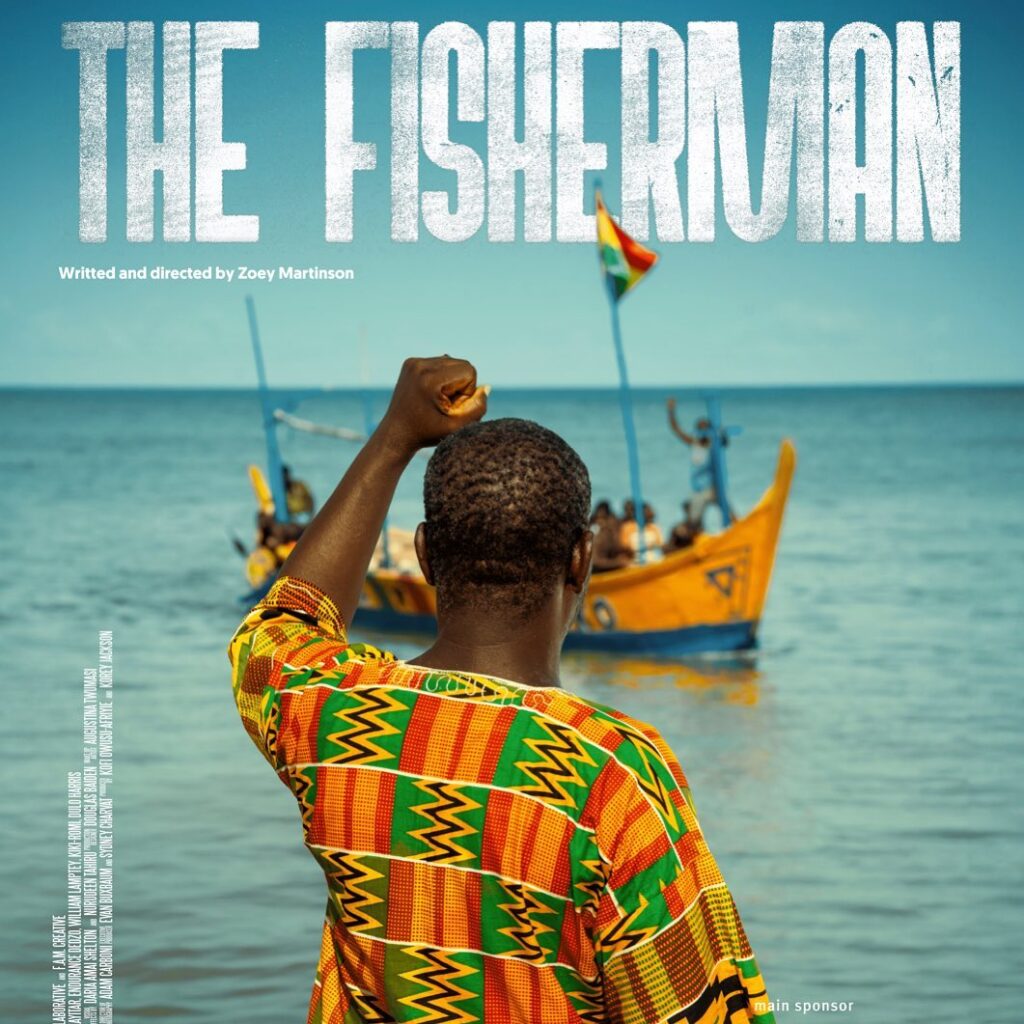
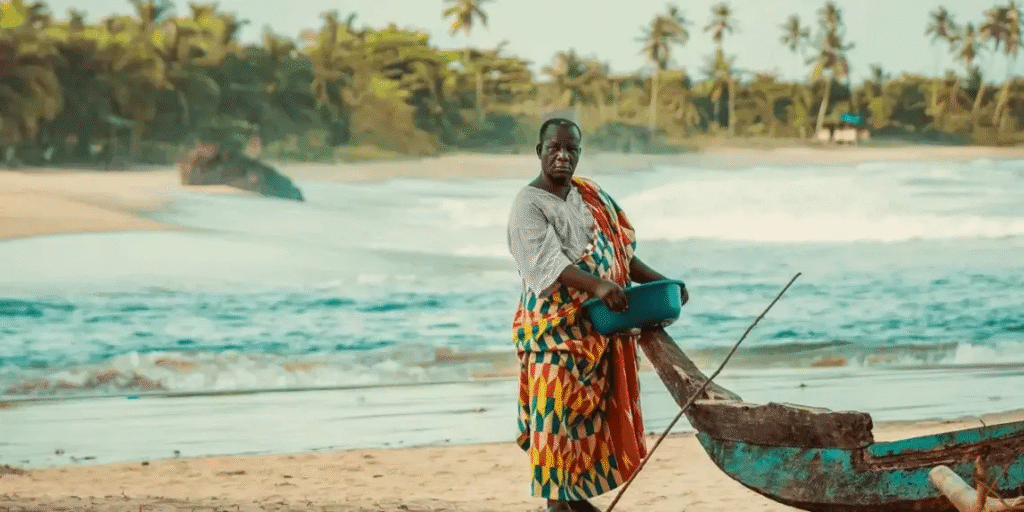
THE FISHERMEN by Zoey Martinson (Restless City, Cupids) is a brilliantly constructed comedy that follows a man in a rural fishing village in Ghana, whose dream of buying a boat takes him on an unexpected but transformative journey, and brings him in contact with unlikely characters, including his most trusted companion- “A Talking Fish”. The FISHERMEN, which was officially selected at the 2024 Venice Film Festival, is made with incredible quality, and from writings that sings, enlivens, and brightens the everyday cultural landscape of everyday Ghana. The film employs comedy to expand the possibilities of story-telling, from it’s Stellar Cinematography to the slightly Fantasical elements it incorporates. The film stars Adwoa Akoto (The Weekend Movie, Played and Betrayed), Ricky Adelayitar (Beast of no Nation, Public Toilet, Africa, Sidechick Gang), Endurance Dedzo, Andrew Adote and Others.
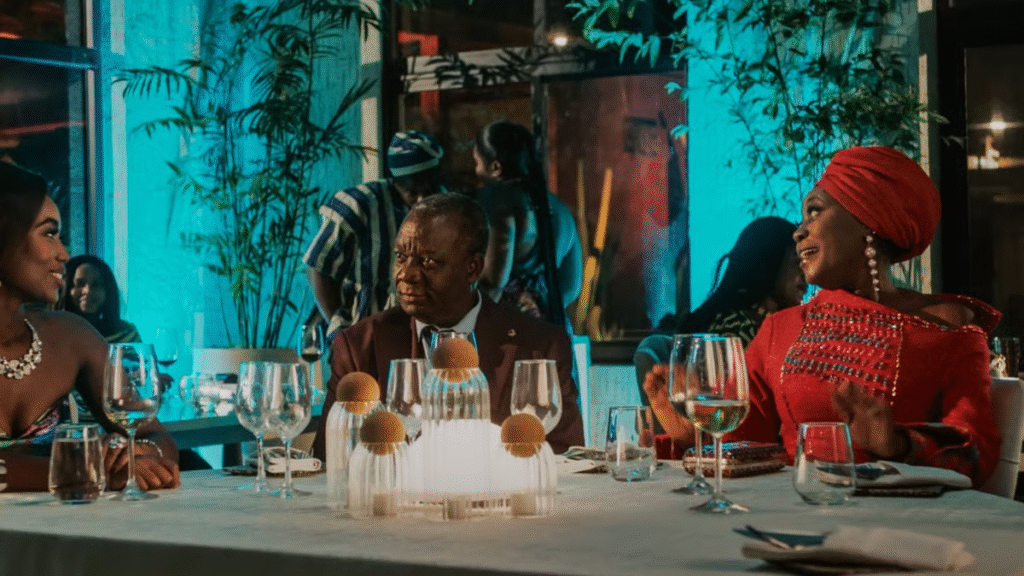
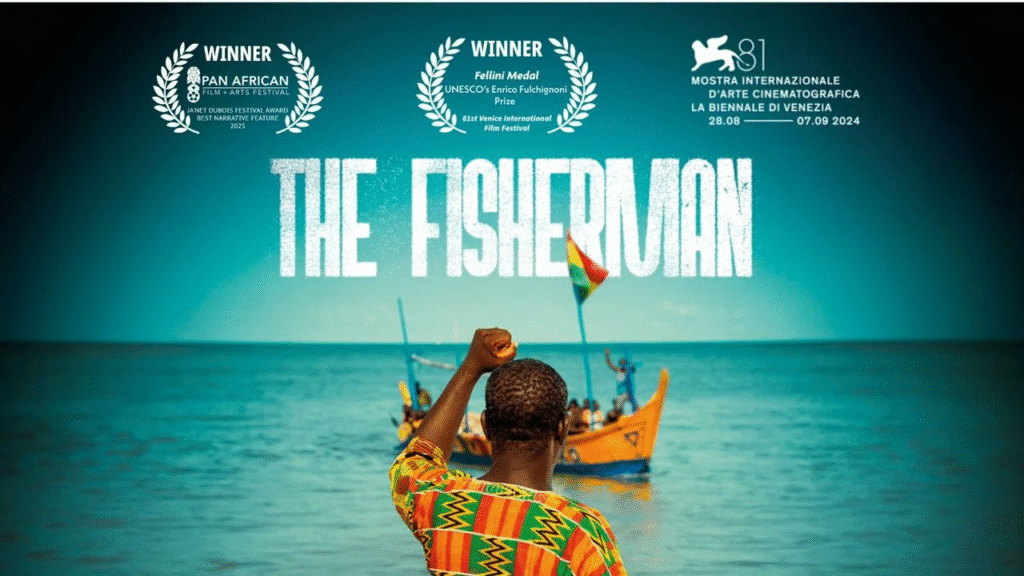
‘The Fisherman’: A Whimsical Clash Between Tradition and Modernity in Ghana
There are very few films that manage to be faithful servants to opposing ideologies. Zoey Martinson’s 2024 feature debut, The Fisherman, does exactly that – waging an eternal battle between past and present in a comedic yet heartfelt fashion, in a slapstick delight all the way from Ghana.
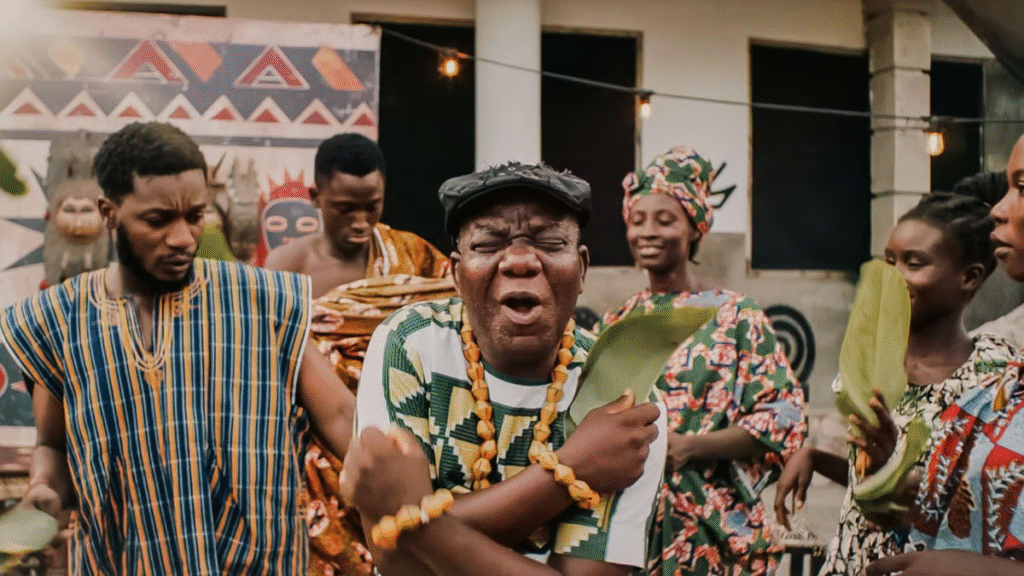
”Zoey Martinson’s “The Fisherman” and the Fragile Balance Between Heritage and Modernity”
A dive into the world of The Fisherman reveals comedy at its base. The film carries a social weight and fascinating politics of contrasts, but also possesses a playful, buoyant energy that lightens its thematic gravity. There is a constant clash between primitivism and progressivism, which produces early friction and misunderstanding between the older and

A dive into the world of The Fisherman reveals comedy at its base. The film carries a social weight and fascinating politics of contrasts, but also possesses a playful, buoyant energy that lightens its thematic gravity. There is a constant clash between primitivism and progressivism, which produces early friction and misunderstanding between the older and younger generations. Yet as the narrative matures, these opposing forces move toward a tentative compromise and, ultimately, a shared understanding.
By portraying the overlap of a traditional fishing society and cosmopolitan life, The Fisherman explores complex themes of identity, survival, adaptation, power dynamics and the fluid spaces in between. Much like earlier works of African literature, for instance, Wole Soyinka’s The Lion and The Jewel, and—dare I say—African cinema, it reflects the struggle to reconcile a primordial order with one reshaped by Western incursion. The difference here, however, is that, under the directorial affairs of Zoey Martinson, The Fisherman uses interesting, bougie symbols and a quirky narrative rhythm to advance its progressive vision.
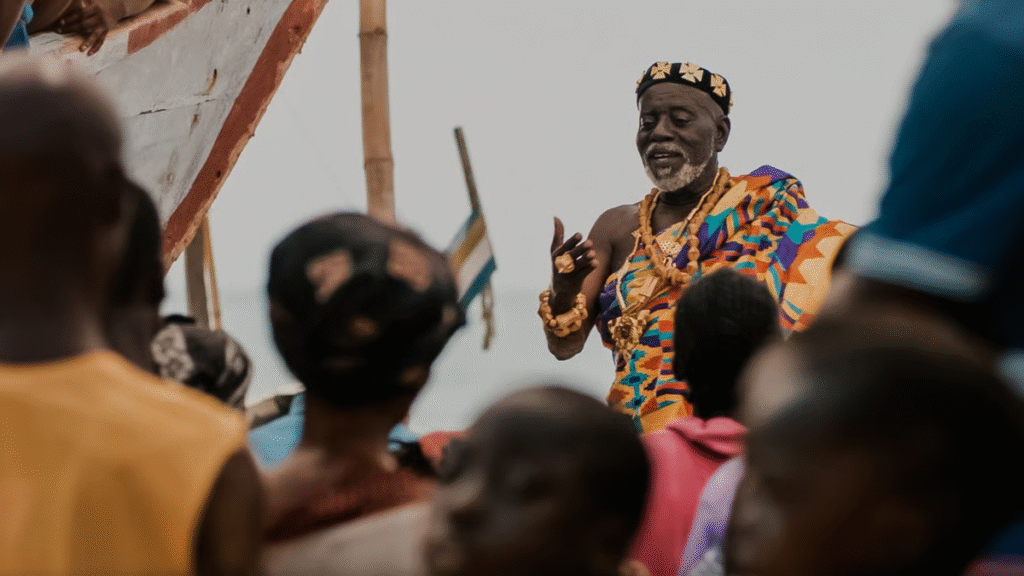
“My work usually carries a bit of social justice, but I like to deliver it in a way that feels light and enjoyable,” Martinson says about her general approach to storytelling, which is evident in the effortless way in which The Fisherman engages its audience. Her theatre company, Smoke & Mirrors Collaborative, is known for its social justice themes and has moved around the globe spearheading Art Missions for the United States Consulate General. For her, humour is a mechanism through which heavy themes become soluble and meaning is admissible.
The Fisherman follows the adventures of Atta Oko, an experienced fisherman from a coastal region in Ghana, portrayed by veteran actor Ricky Adelayitar (also known for his roles in Beasts of No Nation, Sweet Palm Wine). Atta is a grumpy old man whose dream of becoming the boat chief is threatened by his traditional leadership ideals and skepticism towards modern youth culture and digital technology. From the reliance on mobile phones and social media to the adoption of a device for tracking fish in the sea, Atta resists developments that he is not comfortable with.
Early in the feature-length film, a group of curious high schoolers, on what appears to be an excursion or research trip, challenge Atta’s knowledge of the sea, grounding their responses in science rather than the old man’s mythic explanations. The experience irks Atta. We then meet a group of market women who have adopted TikTok dance videos to advertise their goods. When one of the women explains this to Atta and afterwards consults the internet to answer a question directed at her, he is disgusted. “This will be my first order of business when I become boat chief—to ban phones, ” he declares emphatically.
But things do not go as expected. As the boat chief title slips away, he agrees to go with a set of three hopeful youths, Shasha, Kobina and Emmanuel, to Accra for a bank loan with which he can acquire a new boat, elevate his status, and possibly re-position him for the title. Taking along a magical talking fish given to him as a gift, Atta travels with the youths to the city. Their mission proves challenging as they struggle to survive in a new environment, taking odd jobs and seeking help from Atta’s daughter and her husband-to-be. When Atta returns to his community and is made boat chief, he relinquishes the position to Shasha and accepts retirement, a move that indicates his transformation from resisting modernity to embracing it.
The inspiration for the film comes from Martinson’s background. Born on the Menominee Nation, northeastern Wisconsin, United States, she has also lived between Africa and the United Kingdom. The award-winning Ghanaian-American filmmaker spent part of her childhood in Keta, a rural fishing village in the Volta region in Ghana, where she had a firsthand experience of the lives of fishermen. Years later, when she became a filmmaker and began working in the Ghanaian film industry, she learnt through her producer Kofi Owusu-Afriyie about the government’s decision to relocate traditional fishermen from Jamestown, the oldest fishing community in Accra, and build a modern seaport. Intrigued by this piece of news and other observed developments from multiple visits to Ghana, she decided to reflect how these changes affected the existence of commoners, particularly people in coastal areas dealing with issues like erosion and sea defense walls. As writer-director, she needed to tell the story in the most humanistic and relatable way possible, which made her create a protagonist that is an aging fisherman forced into retirement. Through the protagonist’s city expedition, Martinson shows us how individuals and groups of different social classes relate with a rapidly changing system that often prioritizes those with access to banks, loans and modern infrastructure over traditional systems.
An exciting element of The Fisherman is the talking fish, a concept that is rooted in the folkloric storytelling traditions of the Ewe region in Ghana where Martinson lived. With this symbol, the film straddles the boundaries between reality and surrealism, showing the interconnectedness of the natural and otherworldly realms with emphasis on how the latter may influence the trajectory of the former. Martinson describes the Ewe people as impressive storytellers, whose tales often mix reality with the mystical, and credits the opening story of her film to a tale she was told while visiting Cape Coast Fort. In The Fisherman, Atta’s worldview and interactions embody this magnificent synergy of human and superhuman energies. He is the only one who hears the talking fish whenever it speaks, and this fish, with its bougie speech patterns and enigmatic style, becomes a guide for the fisherman, easing him into the next chapter of his life and opening him to change. “If he were to suffer a breakdown,” Martinson says over the Google Meet call, “it made sense that a fish, which is central to his life, would guide him through that phase.”
The Fisherman is co-produced by actor Korey Jackson (Luu Vision Media) and Nigerian-American actress Yvonne Orji who doubles as executive producer, with Adam Carboni as cinematographer. For the rural setting, filming took place mostly in Boutre, a fishing community near Takoradi, around Cape Coast, with pickup shots taken from two other coastal settlements, Winneba and Boutre; while the city scenes were shot entirely in Accra.
Though this is Martinson’s directorial debut for a feature, she had previously filmed in the country and understood the procedure involved. As was traditionally acceptable, she and her producer first sought the permission of the community leaders, bringing along gifts for each chief and explaining the project. The chief then let them know the rules to follow and communicated via the community loudspeaker so everyone was aware of the production. One such rule from the Boutre chief was that they were prohibited from filming anyone without their permission or capturing unclad children. They rented the boats used in the film and paid willing locals for participation as extras. To manage the crowd, the crew set up a monitor for curious children and other community members where they could watch the filming process without interfering with the set. This created a cooperative and conducive environment for the success of the production.
The cast of The Fisherman comprises Endurance Dedzo, William Lamptey, Kiki-Romi, Adwoa Akoto, Kiki Romi, Dulo Harris among others. On achieving this, Martinson worked with casting director Maoko Kodazi in a process that began with the prospective actors auditioning on tapes, after which the team in charge narrowed down the outstanding submissions from the first round. Martinson then met the shortlisted actors for callbacks, and it seemed to her that each actor was exactly made for the role assigned. Making Ricky Adelayitar the lead actor was equally an important decision for the production. “He has an amazing range: he can be funny, serious, and deeply moving, ” she says. “Even though his character can be frustrating, he makes you love him. Every actor brought their own personality into the role, and that made the film feel very real.”
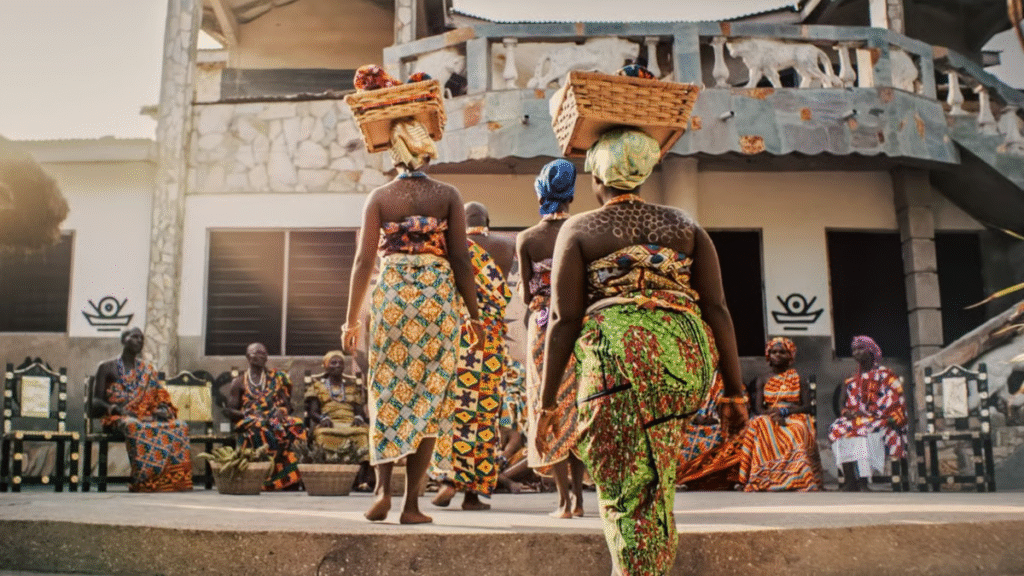
The Fisherman recently screened at the 2025 Black Star International Film Festival, adding another chapter to its series of global wanderings. Premiering in 2024, it became Ghana’s first official selection for the Venice Biennale Film Festival, where it won UNESCO’s Fellini Medal. It has also been screened at the New York African Film Festival (NYAFF), Pan-African Film Festival (PAFF) where it was won the Ja’net Dubois Best First Feature Narrative, New Orleans Film Festival, Miami International Film Festival, San Diego International Film Festival, Cleveland International Festival, and RiverRun International Film Festival. The film is currently showing in the Ghanaian cinemas and is slated for screening at the upcoming Africa International Film Festival (AFRIFF) in Nigeria this November.
The film follows an elderly fisherman, Atta Oko (Ricky Adelayitar), who, after being forced into retirement, finds himself on a wacky adventure that takes him – along with an ambitious young trio from his village and a talking fish with refined taste – to Accra in search of money to buy a new boat and form their own boat crew after Atta is passed over on his lifelong dream of becoming a boat chief.
I call The Fisherman a faithful servant to two masters because, at the start, it shows us the world as Atta knows it – the old world. The film opens with sweeping shots of Ghana’s coastline, acquainting us with a fishing community threatened by commercial fishing that is outselling and driving local fishermen out of business.
On the other hand, we also see the world as it is, the one Atta has refused to adapt to. His peers are moving forward with it, like the market women who dance on TikTok to promote their businesses and “connect” with young people, while he stubbornly wants none of it. Atta wrestles with technology, with modernity and urbanisation, and what they have done to the world he once knew.
The young trio who accompanies Atta to Accra – Shasha (Endurance Dedzo), the only person from the village with a degree in Nautical Science, along with Kobina (William Lamptey) and Emmanuel (Kiki Romi) – all love and respect the old man and his idiosyncrasies, but they can’t understand why he refuses to embrace new ways of doing things. His willingness to meet them halfway and try out a few of their ideas, like seeking out a bank loan or attempting to make money through Texas Hold ’Em poker, supplies the film with many of its zingiest moments.
At the heart of The Fisherman is also Koobi, the talking fish that spouts witty one-liners, a lot of them deliciously inappropriate. Only Atta can hear what he says. And while Koobi may at times seem as though the script designed him as a stand-up comedian, he still manages to carry a lot of pith throughout the story. Will he get roasted? Perhaps fried? Will Atta lose his precious talking fish before he relays the important “message” he was meant to give the old man? The audience holds its breath in drama-induced anticipation between comedy-earned guffaws.
The journey to Accra reunites Atta with his prodigal daughter, Naa (Adwoa Akoto), who since coming to the city where she’s working to make partner at a law firm, has refashioned herself as a modern city woman – Liz. She’s a daughter Atta barely recognises, a betrayal of the person she once was – living her modern life in her big house with a man outside marriage. The daughter he remembers used to steal his fish to rescue them and return them to the ocean. The one he meets in the city asks him to lie about who he is to please her wealthy boyfriend’s family. Their strained father–daughter relationship is explored with such delicacy that by the end, you gain appreciation for both perspectives.
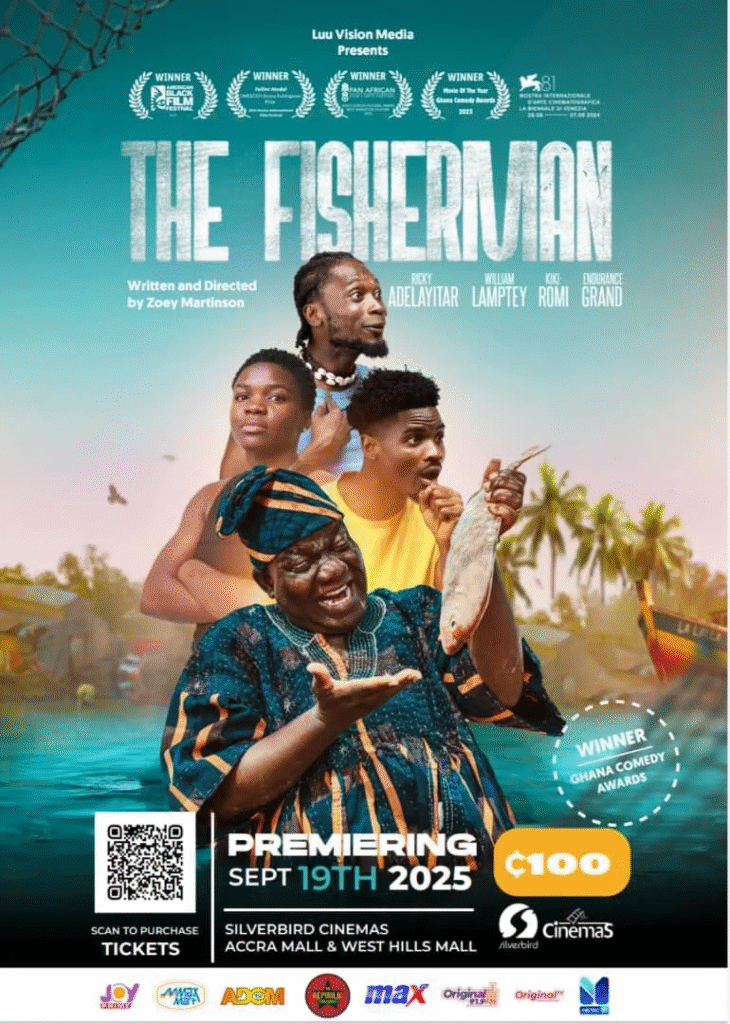
The old world in The Fisherman is quaint and sober, while the modern world, filled with cityscapes and noise, is humorous and largely unthreatening. This makes the inevitable passing of the torch in the third act all the more heart-warming, because the future it gestures toward feels hopeful rather than harsh. And while the film critiques the modern world for its erosion of culture and environmental degradation, the old world isn’t spared either; the film shows it in all its flaws and beauty. One of the film’s most poetic moments finds Atta and his friend, another elderly man retiring from his position as boat chief, sitting by the beach, looking out to sea and recalling their childhood. As they play with the water, the film cuts between their present and past selves in a moving visual echo. The Fisherman boasts evocative moments like these, peppered throughout the film.
The dialogue is delightfully wacky, clearly written to evoke laughter. For a cynical viewer like myself, it might at first feel “cringey,” but the earnestness of the story will have you chuckling and smirking in no time. It wins you over. Some of Koobi’s jokes are too dry or too frequent for my taste, yet he remains an anchor in Atta’s journey.
Ultimately, The Fisherman feels first like a recognition, then a reconciliation between past and present for its protagonist and his family. The ending is more emotionally satisfying because it honours the core of this ethos. There is no winner, of course. There can’t be.
There is only recognition and acceptance.
Cinematic View: SILVERBIRD CINEMA, ACCRA
6] ‘OVER THE BRIDGE’ (NIGERIA)
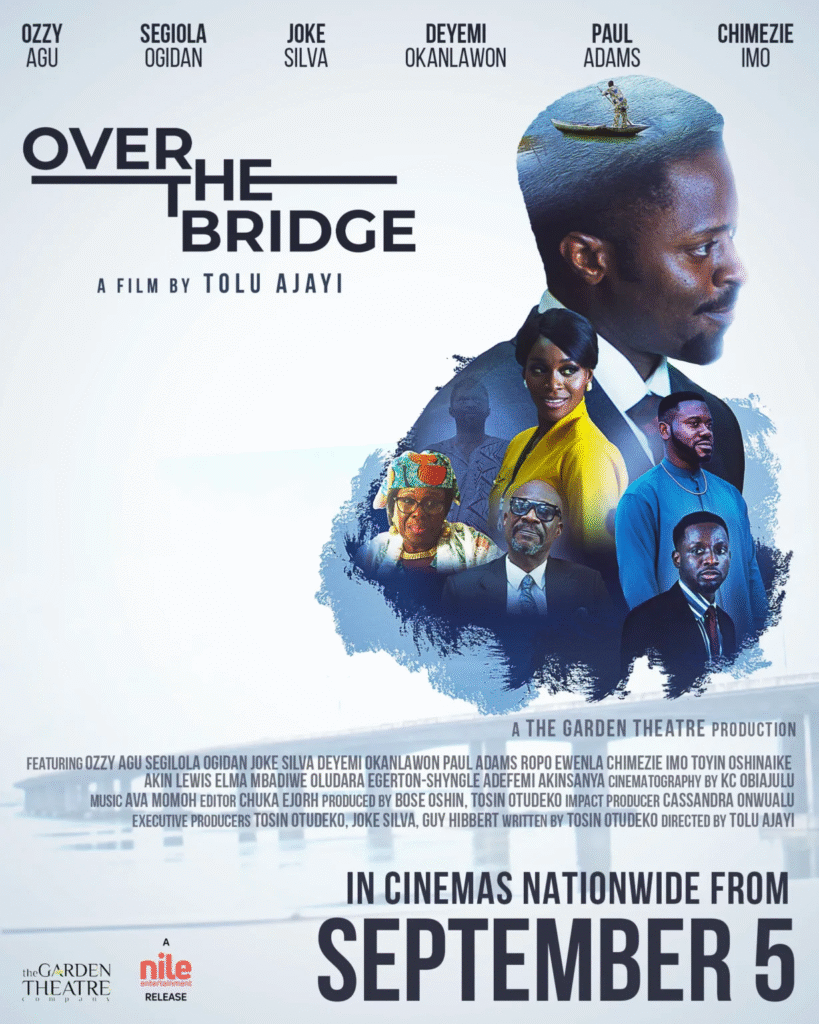
OVER THE BRIDGE is a stellar drama from Director Tolu Ajayi (Princess on a Hill, The Dead), which follows the main character Folarin Marinho, who goes missing on his birthday, resulting in a search that peels back the struggles that surrounds his life. The film has been well-received, screening at the New York African Film Festival 2024. It’s a story that handles the Psychological with the Socio-economical effects with ample grace and agility. The film stars Ozzy Agu (Walking with Shadows, Banana Island Ghost, The Lost Okoroshi), Joke Silva (The secret laughter of Women, Funmilayo Ransome-Kuti, Chief Daddy), and Others.
”Over the Bridge emerges as not just a critique of Nigeria’s systemic rot, but a meditation on emotional disintegration as mental health is positioned not as a narrative footnote, but as a core element in the story of ambition and success”.
Art, at its most incisive, is not only a mirror to society’s grand narratives, but also as a magnifying lens for the seemingly mundane. Those everyday silences, and compromises, that often go unnoticed yet carry the weight of social and existential significance. By rendering the familiar yet unspoken, art compels audiences to confront the vital truths embedded in the ordinary. It reveals how what is dismissed as trivial or normal can be the very thing that impacts a human life negatively.
Currently, in terms of film, Africa’s cinematic terrain is alive, and a new generation of artistic directors is reshaping visual storytelling. One of them is Tolu Ajayi.
Ajayi is a director hailed for acclaimed TV series such as Tinsel, Gidi Up, and MTV’s Shuga, as well as award-winning short films like The Encounter (2015). His feature debut is the 2023-released film, Over the Bridge, a psychological thriller which premiered at the New York African Film Festival and garnered 12 AMVCA nominations the following year.
In this debut feature, Tolu Ajayi navigates the interplay between the visible and the overlooked, drawing attention to the norms of daily life in his country, Nigeria, and how they lead to broader happenings at an individual level.
Over the Bridge tells the story of Folarin, played by Ozzy Agu, whose much-awaited dream project, a major infrastructure project in Lagos, Nigeria, is stalling, dogged by financial issues and scandals.
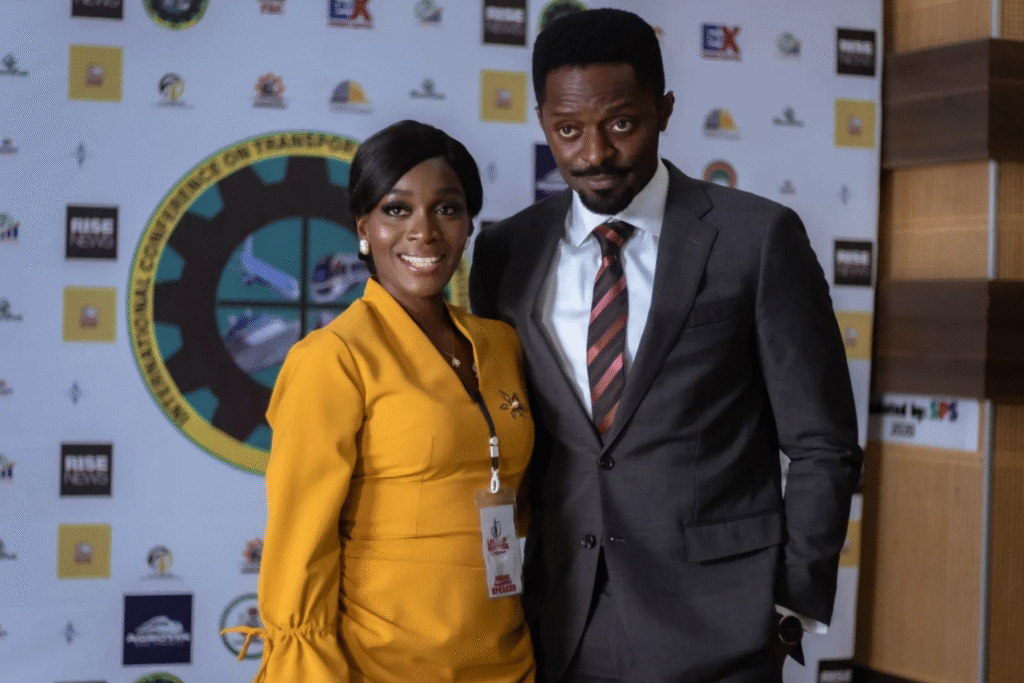
As days go by, while working to push this project forward, he finds himself navigating a maze of underhanded deals which operate at the margins of professional integrity. At the same time, he mentally grapples with the pressure of the unfortunate circumstances surrounding his young protégé, Kevin (portrayed by Chimezie Imo), whose involvement in the project results in his death.
One day, on his birthday, Folarin goes missing, and his wife Jumoke (portrayed by Segilola Ogidan) embarks on a frantic search for him. It turns out Folarin fell ‘ over a bridge’ as his car is discovered in one. Jumoke fears his death but in truth, Folarin has survived the fall but suffers from amnesia, and is rescued by a fisherman who nurses him back to health.
Back home, Jumoke suspects that Folarin’s mysterious disappearance is tied to the pressures surrounding the controversial project he was involved in. As she grapples with his absence—both emotionally and financially—Folarin struggles to piece together the fragments of his past.
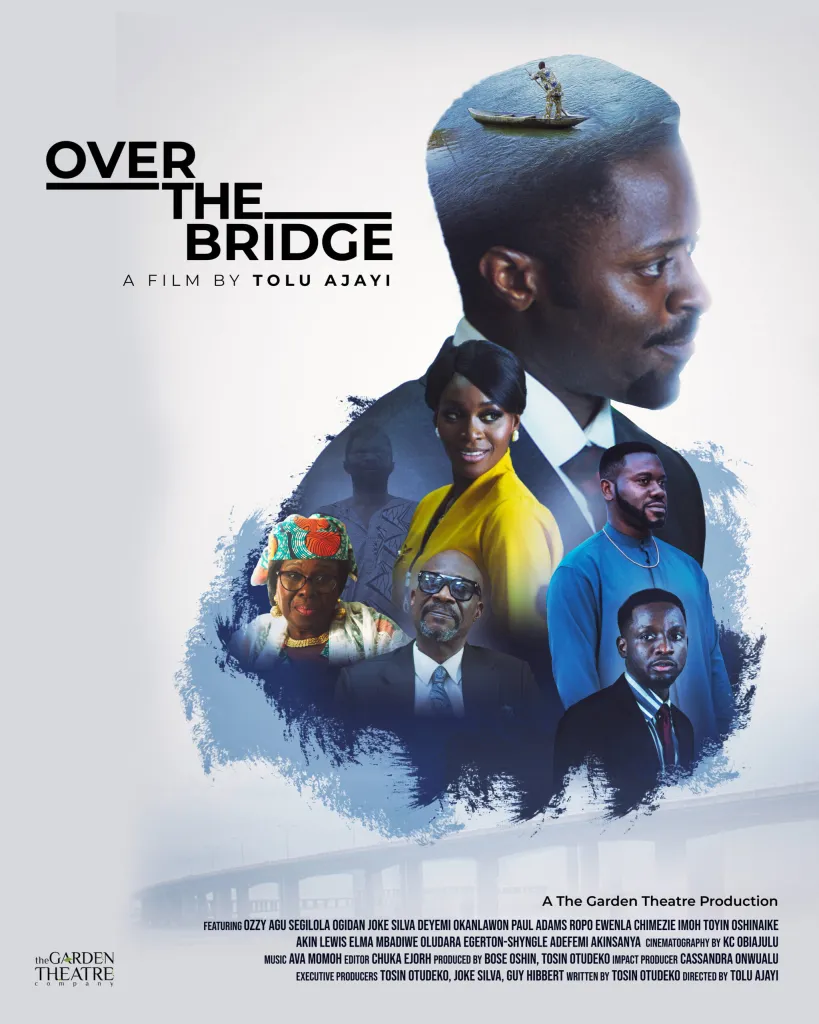
Ozzy Agu’s command of language as Folarin, and exceptional dialogue delivery enhance the main character’s authenticity and also brings more into focus the film’s thematic depth, effectively articulating the film’s exploration of mental and psychological health.
Through Folarin’s journey in the film, Over the Bridge revisits the familiar Nollywood story of ambition and desire for upward mobility. But the film distinguishes itself by peeling back the glossy veneer to expose the effects of the ethical decay festering within Nigeria’s social world.
Over the Bridge becomes not just a critique of systemic rot, but a meditation on emotional disintegration as mental health is positioned not as a narrative footnote, but as a core element in the story of ambition and success.
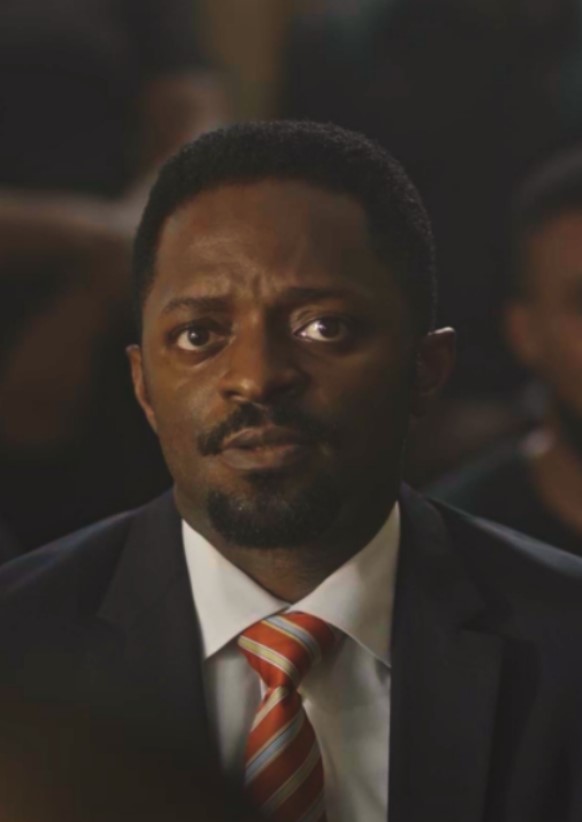
The supporting characters to Folarin seem crafted to serve for the progression of his individual narrative and also advances the film’s underlying subtext. For example, Segilola Ogidan as Jumoke, cast as the bewildered wife of a man grappling with mental turmoil–becomes a vessel for exploring the unspoken frustrations of partners navigating crises they cannot fully comprehend, a choice that gives the film a powerful subtext of relational strain.
The only downside and maybe what might be the film’s only witnessed flaw, lies in its lack of substantially explained backstories—of both Folarin and these supporting characters. But this might be a choice that may well be intentional, as the narrative appears more invested in exploring the psyche of an individual at a specific period in time, than in constructing a fully fleshed-out, plot-driven arc.
This introspective focus is mirrored in the film’s visuals as well: KC Obiajulu’s cinematography is marked by refinement and precision, which is elevated by meticulously authentic wardrobe selections in each scene in the film. There is deliberate pacing of shots and scenes that don’t rush but linger just long enough to invite reflection into the main character’s (Folarin’s) inner world. A delight for any cinephile.
When memories of Folarin finally return, he reunites with Jumoke and the two begin a journey of atonement and redemption.
Tolu Ajayi’s debut has a greatness that lies in the way it mirrors the human tendency to find truth through story, as the film’s fiction becomes a safe space to confront an uncomfortable topic. Over the Bridge becomes an artistic beauty that softens the blow of harsh realities in a country, Nigeria, making a difficult theme feel both intimate and undeniable.
Further, the film uses a single individual’s story to offer itself as an exploration of the pervasive societal pressure to engage in corrupt practices, particularly the normalization of illegal kickback, that continues to undermine Nigeria’s development.
Ajayi’s film takes a look at how systemic corruption, reinforced by expectations and institutional complacency, compromises not only a nation’s progress but also the moral compass of individuals.
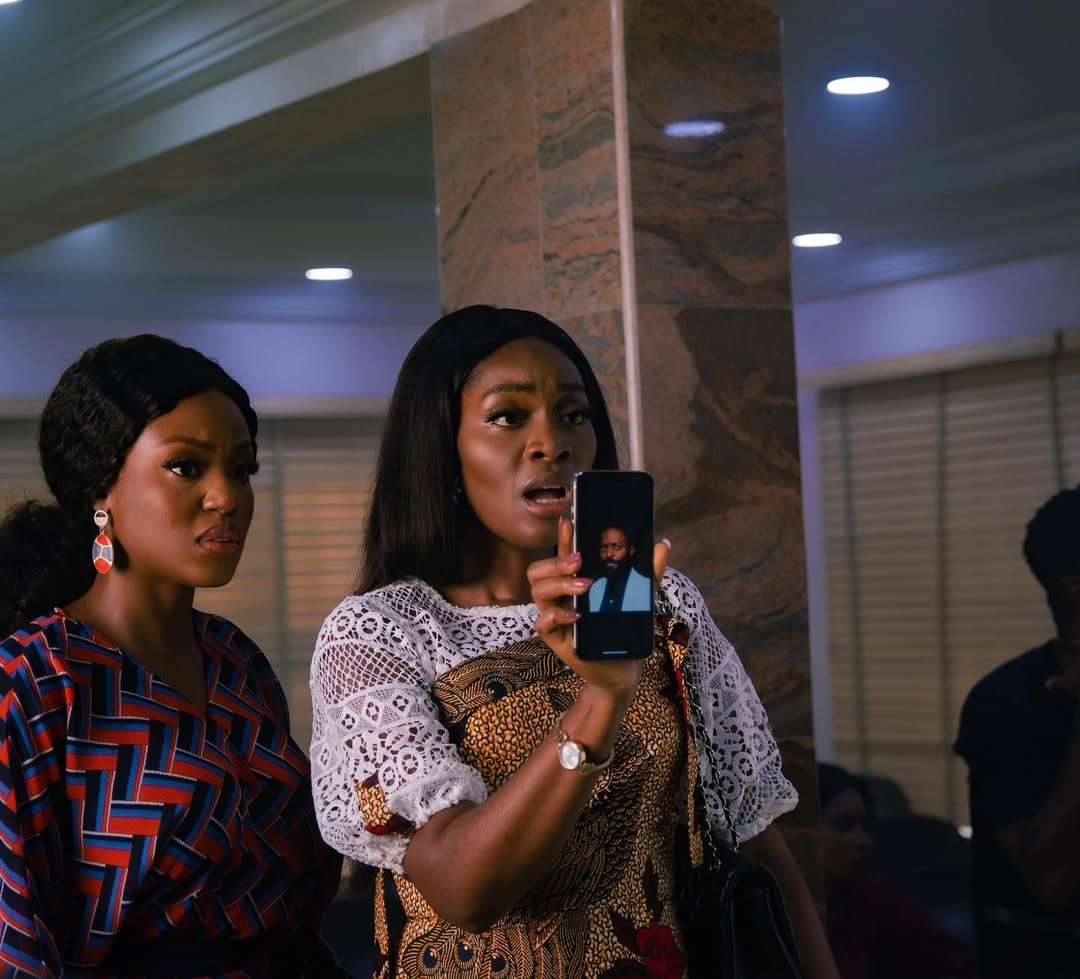
Through Folarin, it reveals how the external demand for unethical behavior infiltrates the psyche, gradually manifesting as an internal crisis marked by guilt, disillusionment, and deteriorating mental health. In this way, the film frames corruption not only as a socio-political issue but as a deeply personal and psychological struggle.
French-American essayist, Anaïs Nin, once observed that “great art is born of great terrors, great loneliness, great inhibitions, instabilities — and it always balances them”. This philosophy is prevalent in Tolu Ajayi’s Over the Bridge, as cinema is employed not merely as storytelling but as a critical mirror to the rot in Nigeria’s social society.
Through its narrative, the film in a fine way interrogates Nigeria’s social realities, exploring its psychological toll on individuals. In doing so, Ajayi affirms Nin’s assertion: art emerges not in spite of, but through, the fractures of instability, alienation, and existential anxiety. The result is a cinematic work that navigates dissonance to arrive at a compelling artistic equilibrium, where real-life disorder becomes the condition for artistic coherence.
Side Musings
- Folarin’s “Where am I?” when he found himself in the small fishing village on crutches deserves a Nollywood Hall of Fame nomination. Somewhere between Hamlet and NTA soap opera.
- The painted boats deserve a credit line. Honestly, they act harder than some supporting cast in recent cinema.
- At some point, I wondered if the village elders were going to offer Folarin as a sacrifice to their gods. That would have been the most Nigerian resolution.
Cinematic View: ALL NIGERIAN CINEMAS
7] ‘EVERY PICTURE NEEDS A FRAME’ (KENYA)
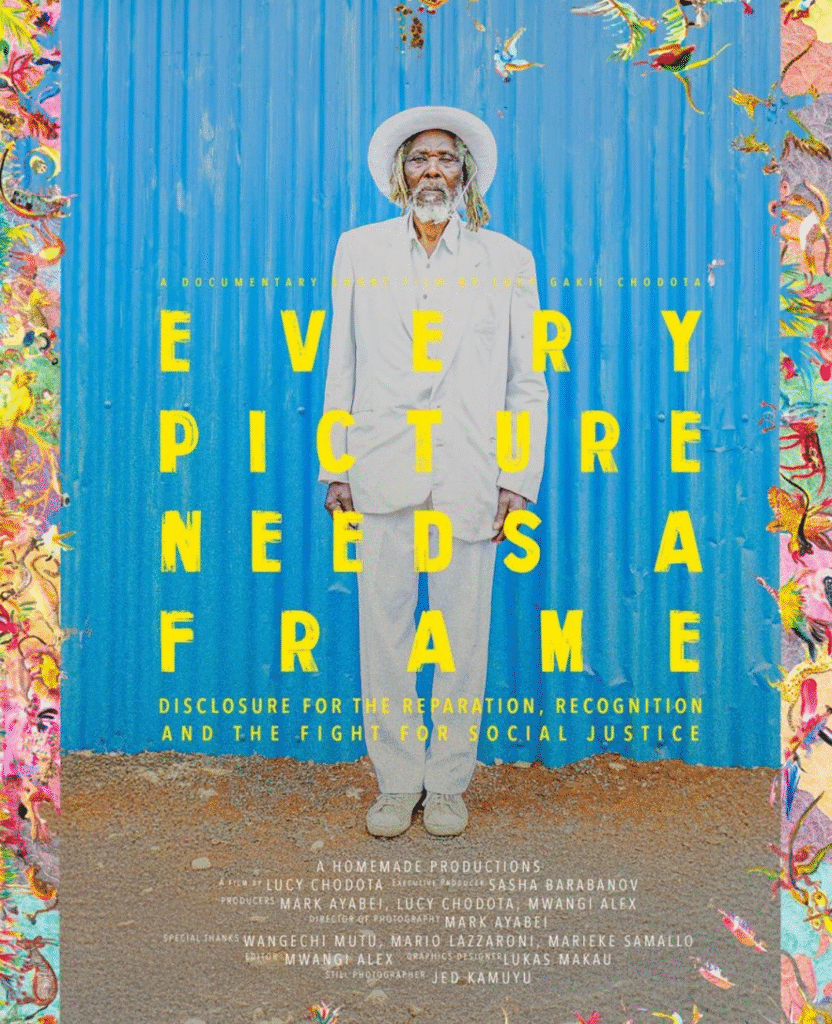
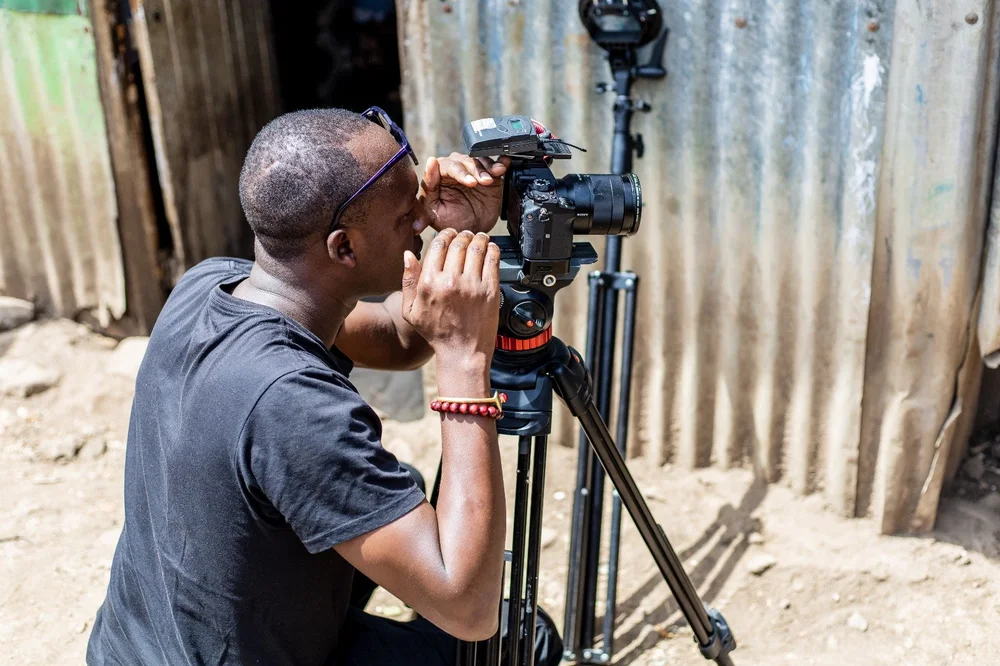
EVERY PICTURE NEEDS A FRAME is a short documentary by Kenyan filmmaker Lucy Chodota, that explores the complex relationship between renowned American photographer Peter Beard and eight Kenyan artists who worked with him over six decades.
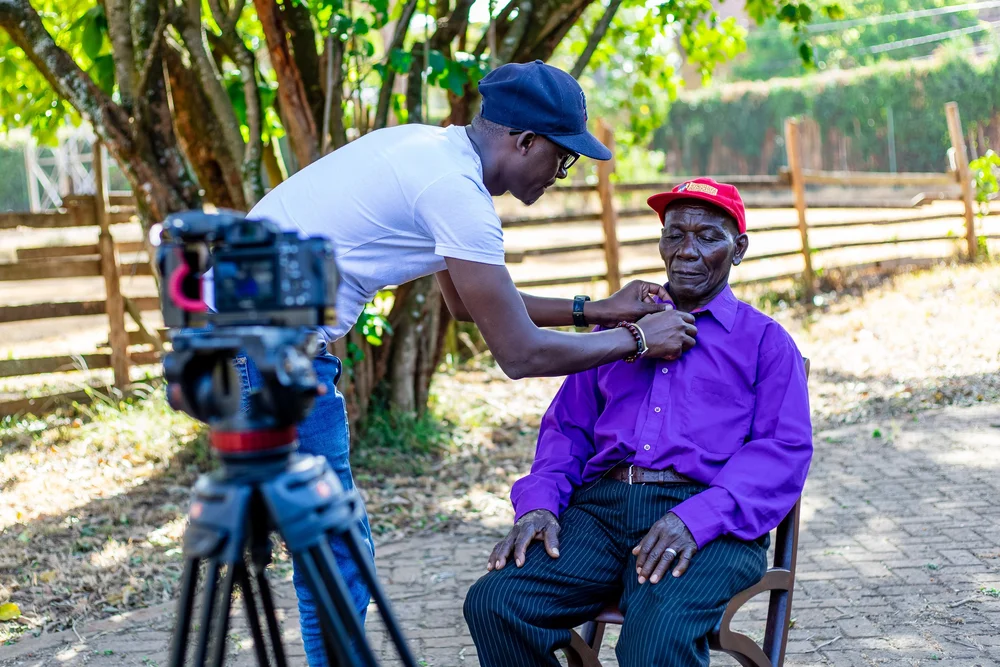
The film follows their artistic journeys back to Hog Ranch, a space once known for his creative energy and freedom, but later marked by pain and disillusionment. Through their stories, the documentary reveals Long-buried truths and raises urgent questions about artistic collaboration, equity and recognition.
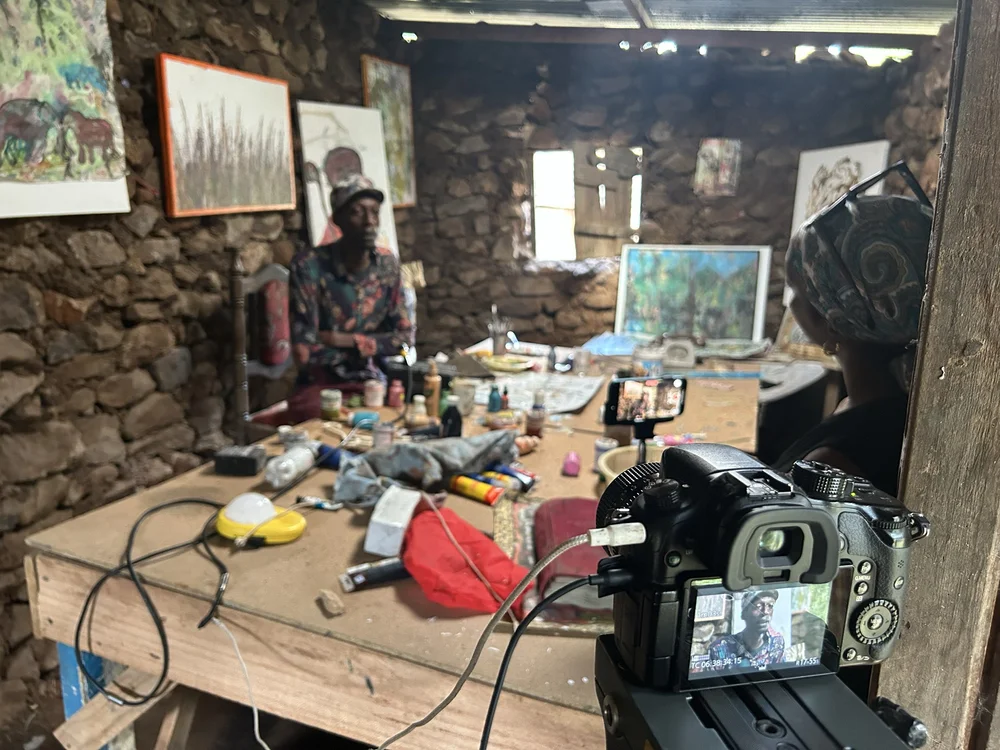
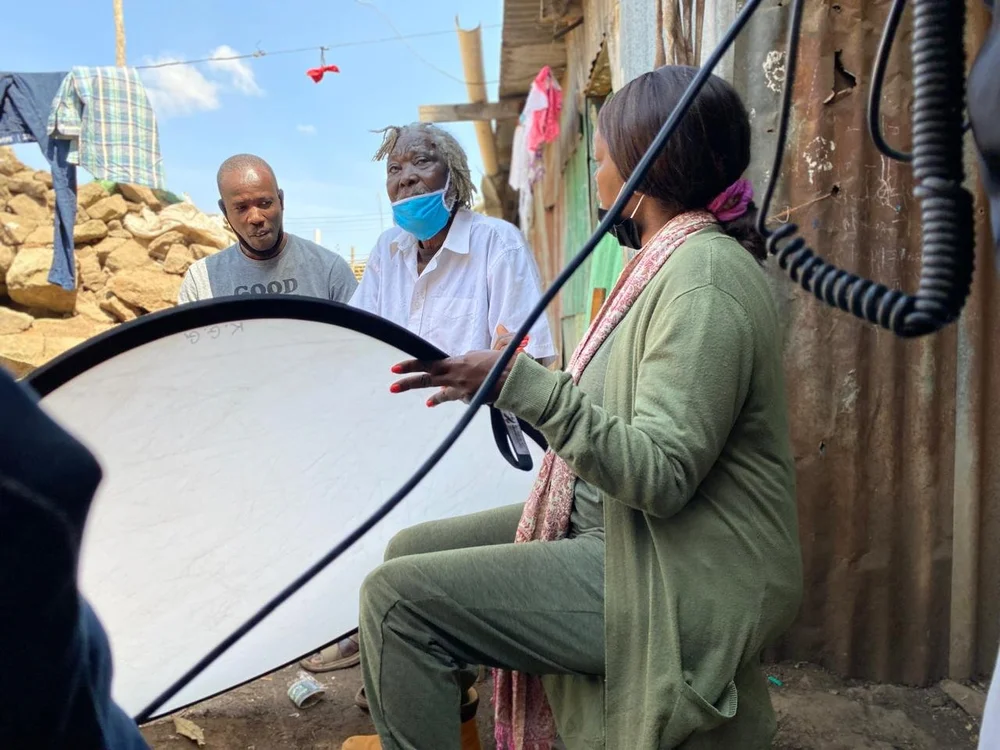
This is the story behind the documentary, Every Picture Needs A Frame, directed by Lucy Chodota screened at Alliance Française, Wednesday 16th. The documentary takes one back to a time when American photographer and Playboy, Peter Beard was at the height of his career, his photos of the Kenyan savannah coupled up with local artwork caught the eyes of many, especially the American elites.

LUCY GAKII CHODOTA
Chodota is an acclaimed African filmmaker, born in Tanzania and raised in Kenya. After nearly two decades in the Netherlands honing her craft, she returned to Kenya to found C-Through Productions Ltd and co-own S&L Homemade Productions Ltd. Lucy is best known for the DSTV award-nominated series Rush, the first African English-language show translated into French and Portuguese, and for her lifestyle series Minjiba Entertains, airing on Discovery Network Africa & Asia.
In 2023, she curated a groundbreaking New York art exhibition featuring Kenyan artists who collaborated with Peter Beard, addressing social injustices and elevating African art globally. With a diverse portfolio of documentaries, drama series, and feature films, Lucy remains a trailblazer in African storytelling
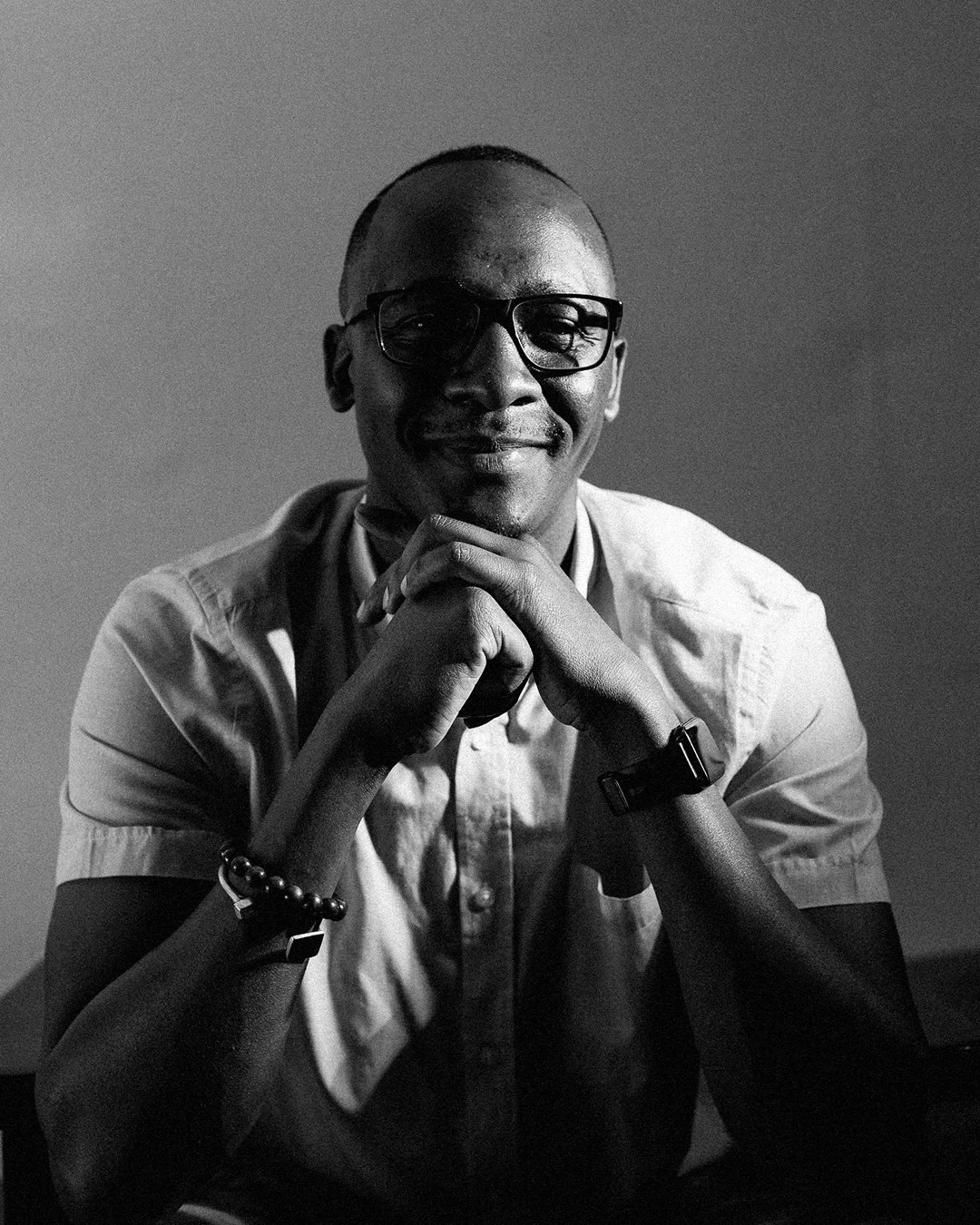
MARK AYABEI
Ayabei is a distinguished Kenyan cinematographer, producer, and director, with a strong academic foundation from the renowned Mohammed Amin Foundation. His body of work, which includes critically acclaimed TV series, Short films, and documentaries, has been featured at international festivals and garnered nominations and awards across Africa, Europe, and the United States.
Mark is deeply committed to showcasing Africa’s rich cultural heritage through film, believing that the continent’s stories have always held immense potential. Through his work, he seeks to document and share these narratives with a global audience, positioning Africa as not only the future of cinema but also a wellspring of powerful, untold stories.
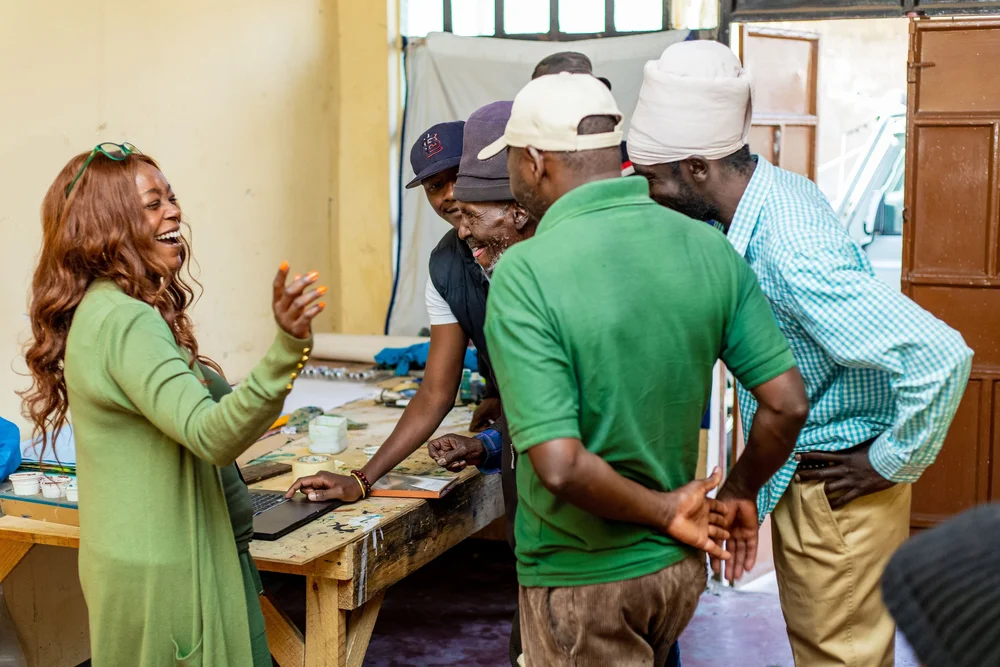
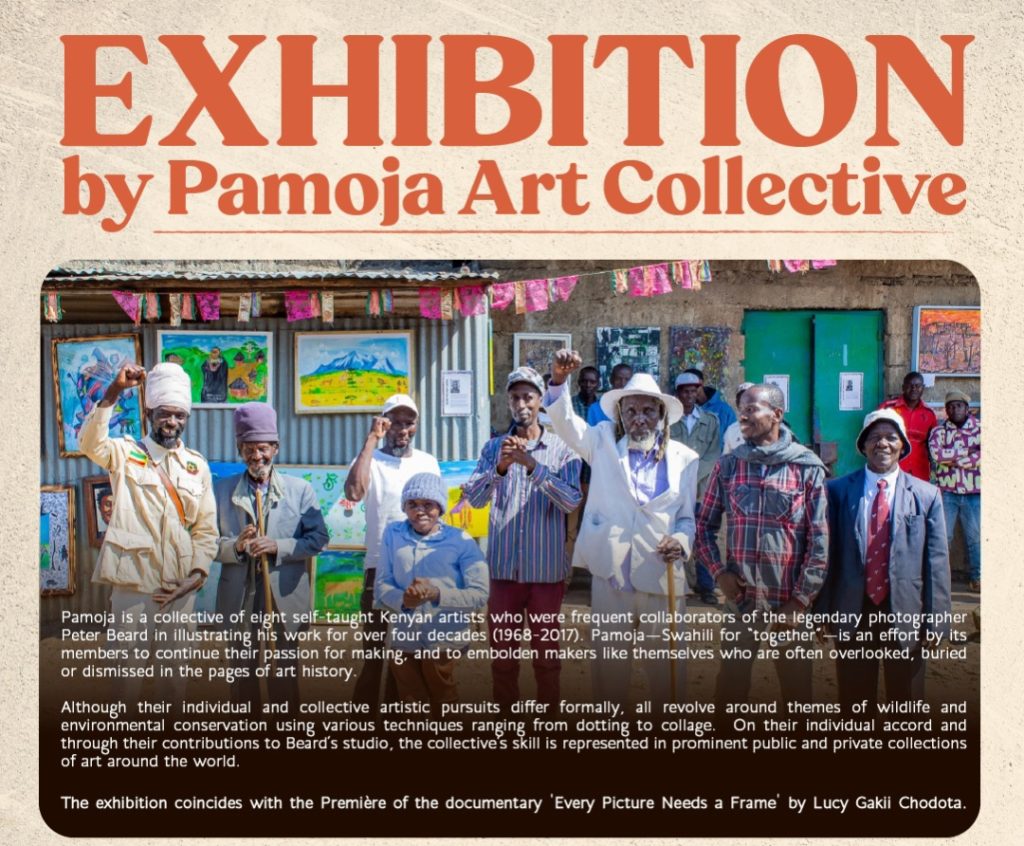
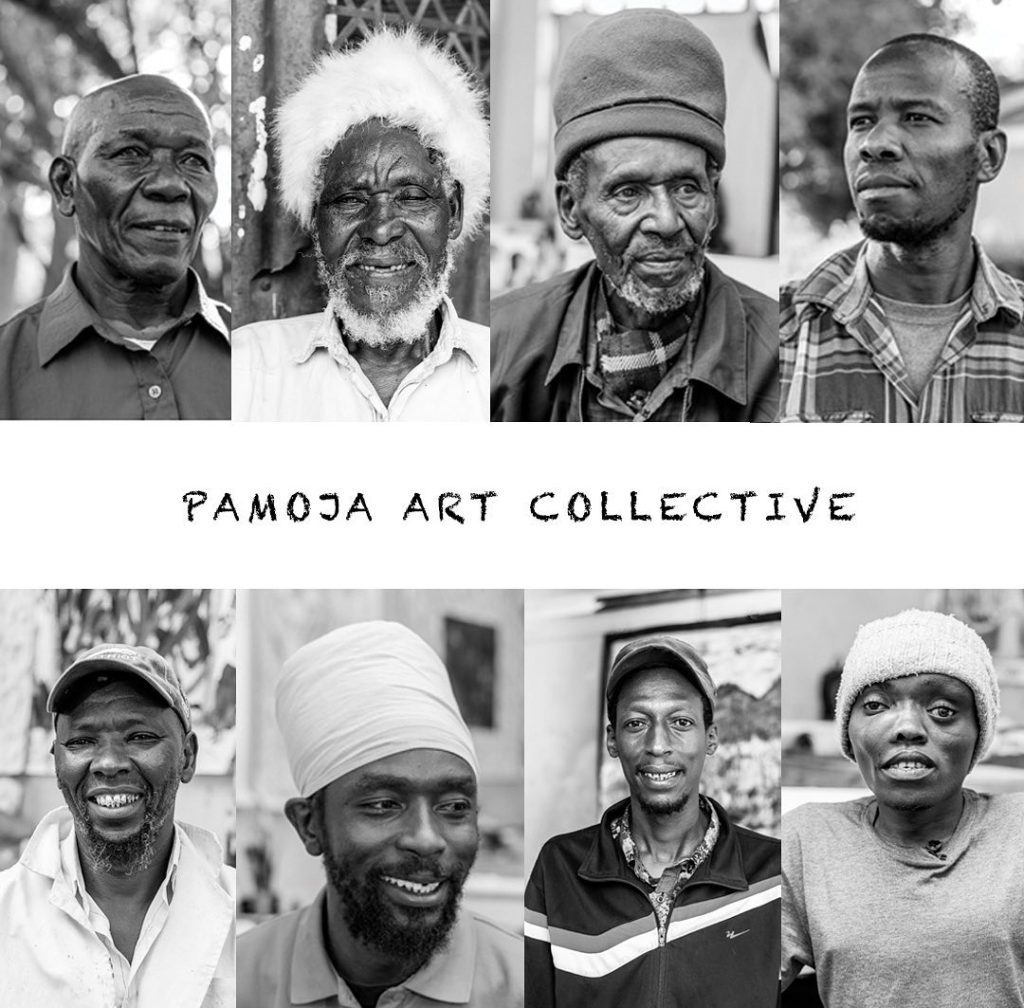
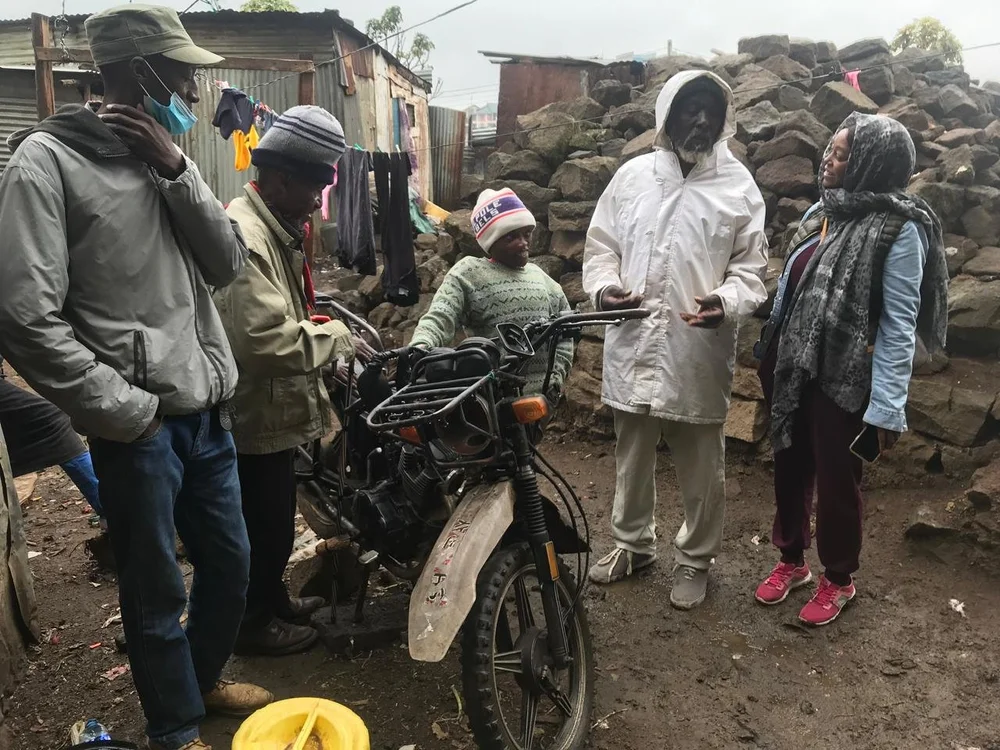
On the flip side, the artists namely; Nathaniel Kiboi, Solomon Misigo, Mwangi Gibson ‘Mzee Mwangi’, Gabriel Macharia, Marimbe Parsimei, Gibson Kuria, Nicholas Njenga and Macharia Mwangi, were held in poor wages, with no way out but to contend with the situation that was backed by demeaning contracts.
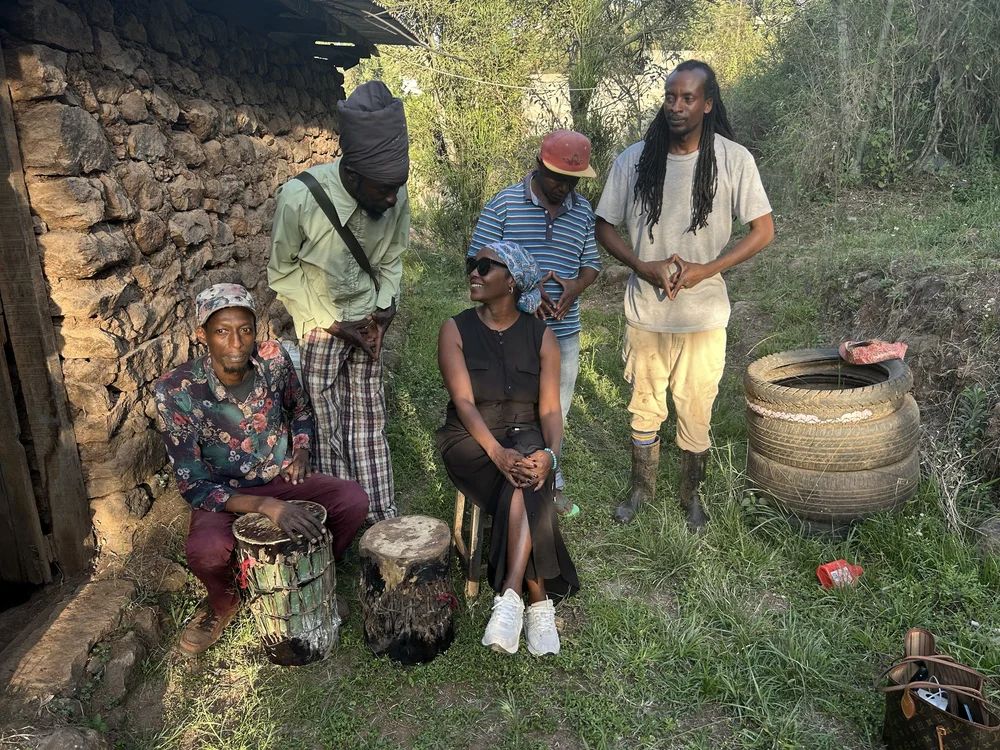

Mwangi Alex
Mwangi is a talented Kenyan producer, cinematographer, and editor with a passion for storytelling. He has contributed to the success of several award-winning feature films and short projects, showcasing his ability to craft visually stunning and emotionally resonant narratives.
With a keen eye for impactful stories, he strives to bring untold perspectives to life, aiming to inspire and engage audiences through his work.
Their prowess still shines through dotting, collage, and other techniques to create contemporary and abstract pieces to show our interconnectedness with nature.
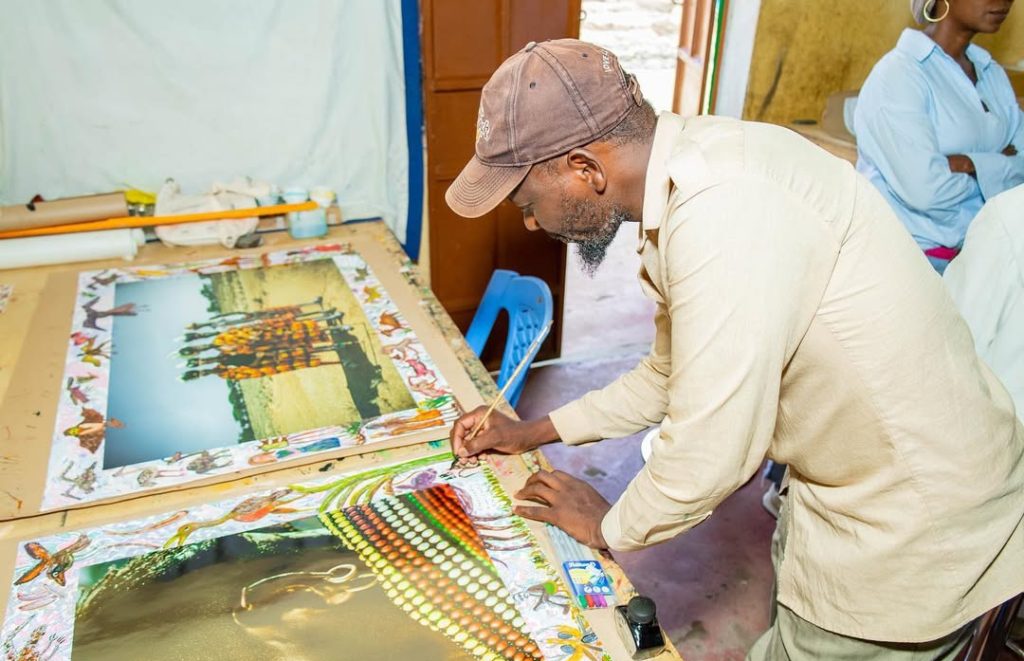
The screening sort out to celebrate the artists alongside an exhibition titled Pamoja Arts Collective in Kenya.
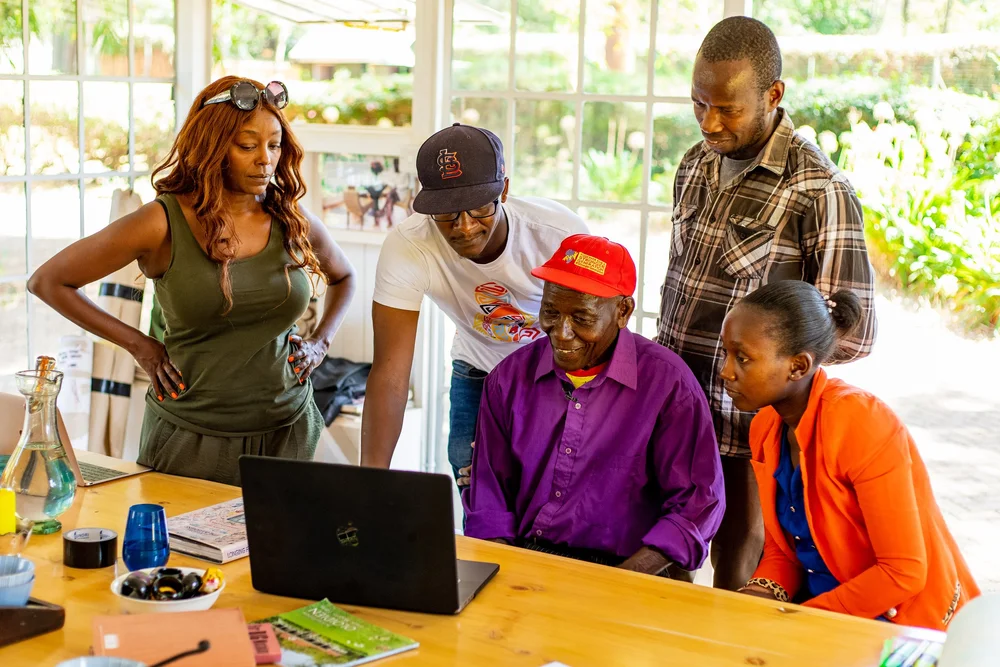
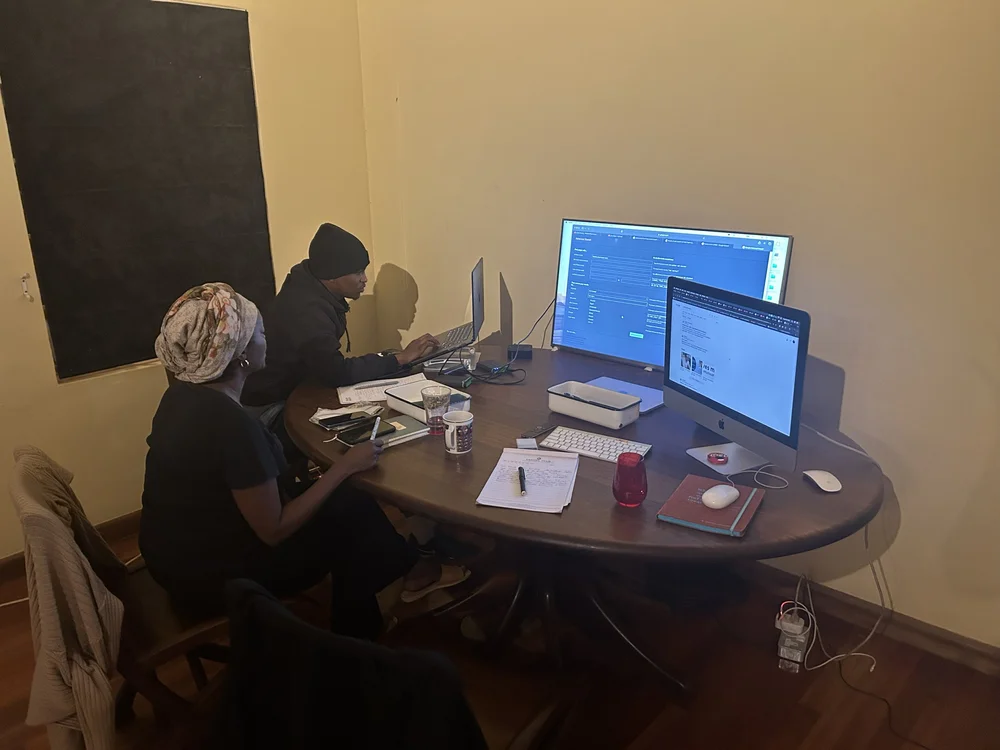
Every Picture Needs A Frame, whilst it’s short runtime, didn’t fail to showcase the clarity of the artists’ lifestyles which were much affected from the exploitation of their works. It cut deep comparing their living status with the price tags placed on their art oversees.
Cinematic. View: UNSEEN CINEMA, NAIROBI, KENYA
8] ‘ONE WOMAN, ONE BRA’ (KENYA/NIGERIA)
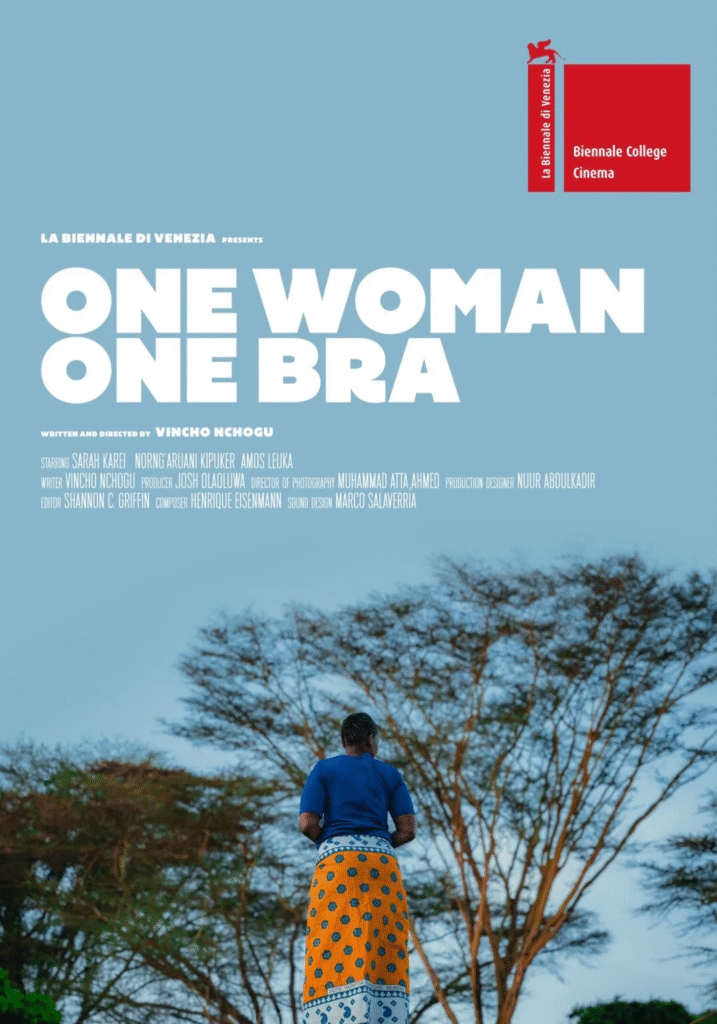
In ONE WOMAN ONE BRA, Kenyan director Vincho Nchogu makes her debut feature with a drama about land, womanhood and belonging. Set in the fictional village of Sayit, the story follows 38year-old “Star”, whose claim to her home is jeopardize by the lack of kinship ties. Her situation is further complicated by the fact that she is an unmarried orphan. When a childhood photo resurfaces, Star suspects that a local food vendor might be her long-lost mother. Her search for identify becomes mixed with a desperate effort to retain her land, leading her to consider many questionable options.
Developed through Biennale College Cinema, One Woman One Bra, is one of four micro-budget features selected for this year’s Vernice Film Festival. IT IS ALSO THE FIRST NIGERIAN-PRODUCED FILM to premiere at VERNICE, thus marking a milestone for producer, Josh Olaoluwa and his Lagos-based company, Conecptified Media.
One Woman One Bra is no ordinary film. Developed through the Biennale College Cinema, the project was one of only four selected globally, a rare feat that underscores its creativity, originality, and artistic depth. Shot entirely in Kenya, it brought together talents from across. This includes award-winning Nigerian cinematographer Muhammad Atta Ahmed, who is a VMA Cinematography Award winner and whose lens captured the story’s emotional intensity.
For Olaoluwa, producing the film was not only an artistic journey but also a historic achievement. “This is such an honour for me, because the Venice Film Festival is one of the most prestigious festivals in the world, and being the first Nigerian to take a feature film there is something I do not take for granted,” he said.
In a bold fusion of Kenyan spirit and Nigerian grit, 1 Woman 1 Bra follows a woman’s defiant quest for self-acceptance, turning a simple bra search into a profound exploration of femininity and resilience.
The 82nd Venice International Film Festival is gearing up for a ground-breaking premiere with 1 Woman 1 Bra, a Kenya-Nigeria co-production marking the first collaboration between the two nations at this prestigious event. Written and directed by Kenyan filmmaker Vincho Nchogu in her feature debut, and produced by prolific Nigerian Josh Olaoluwa, the film was selected as one of four global projects for the Biennale College Cinema 2024/2025 program. Shot entirely in Kenya by acclaimed cinematographer Muhammad Atta Ahmed, it premieres at the festival from August 27 to September 6, 2025, on the Lido di Venezia.
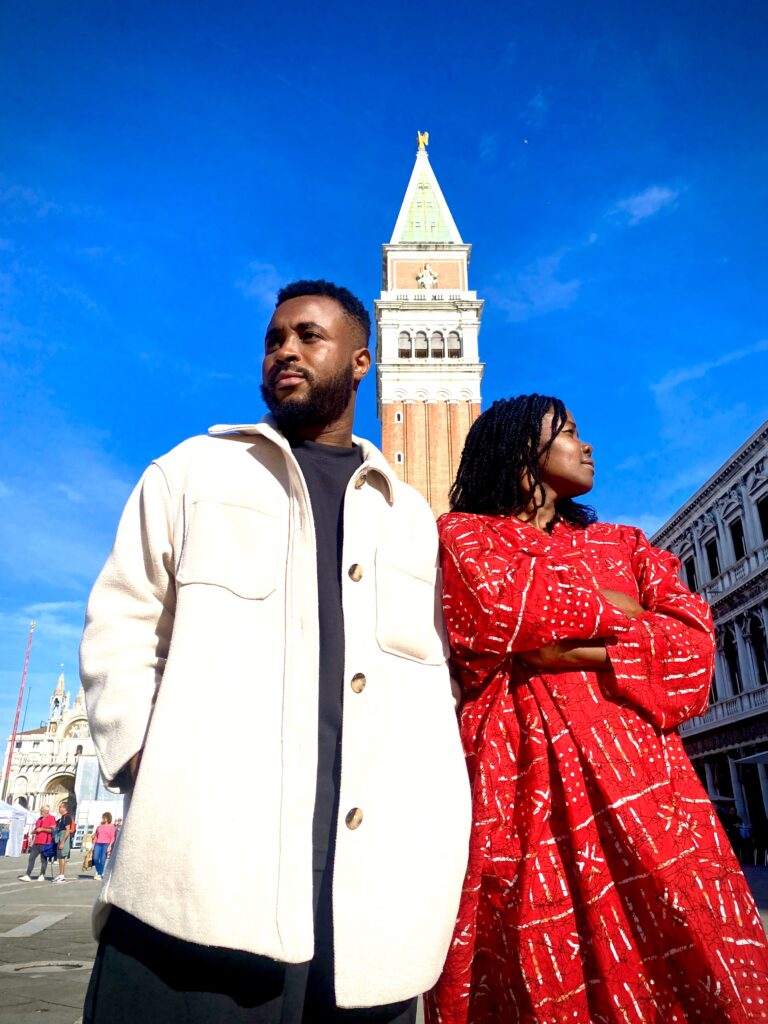
The story centers on a woman embarking on a humorous yet poignant journey to find the perfect bra while reclaiming her identity in her society. Blending comedy, drama, and cultural nuance, the film teases an intimate look at gender, body image, and self-love through an African lens. Olaoluwa, whose credits include over 20 films on streaming platforms like Netflix and Amazon Prime, brings his expertise in elevating diverse narratives, having previously collaborated with Nchogu on Fantastic Tale, which won the Red Sea Souk Production Prize in 2023.

Developed through the Biennale College Cinema, a rigorous workshop supporting emerging filmmakers, the project was one of 12 shortlisted from over 200 submissions, receiving a €200,000 production grant. Nchogu and Olaoluwa’s partnership began at the Red Sea Labs in 2023 and continued at the Torino Film Lab, where they honed their craft. Nchogu’s work has garnered support from Cannes’ La Fabrique, Film Independent, and Doc Society, while Olaoluwa’s films have screened at Slamdance and Apple TV+.
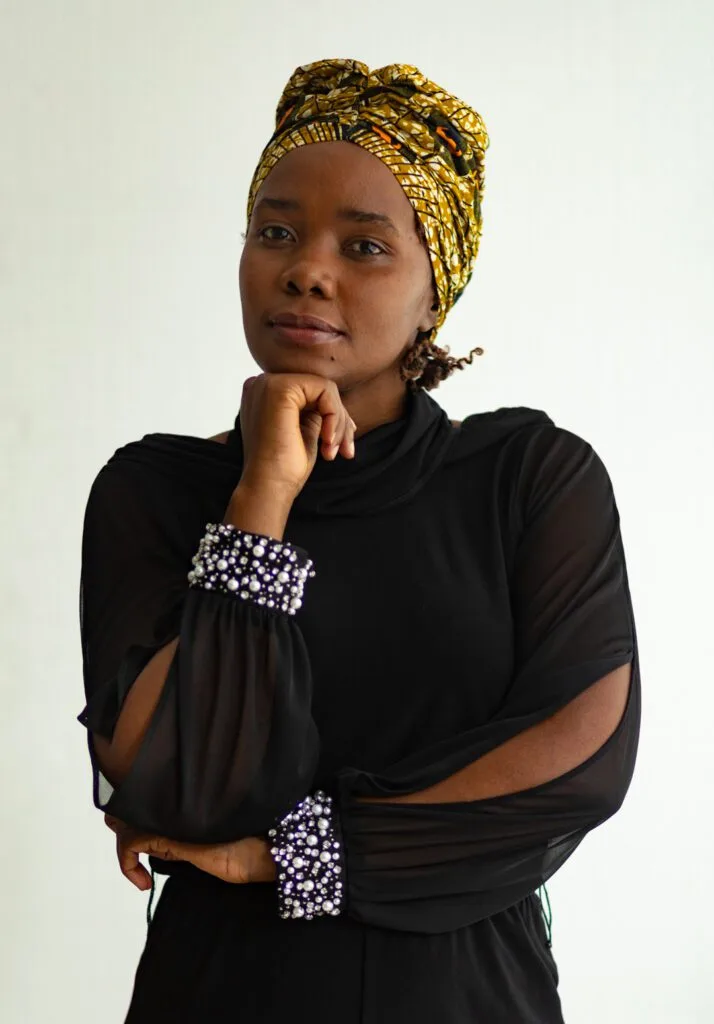
As Venice’s Biennale College spotlights underrepresented voices, 1 Woman 1 Bra stands out for its fresh perspective. With Ahmed’s vibrant cinematography capturing Kenya’s landscapes, the film promises a visually striking narrative that challenges taboos and celebrates women’s stories, aligning with the festival’s theme of innovation.
Cinematic View: ALL CINEMAS WORLD WIDE, BUT was played at VERNICE FILM FESTIVAL’S Giornate Degli Autori from August 27th to September 6th, 2025
9] ‘MAMA WA BABA’ (EGYPT)
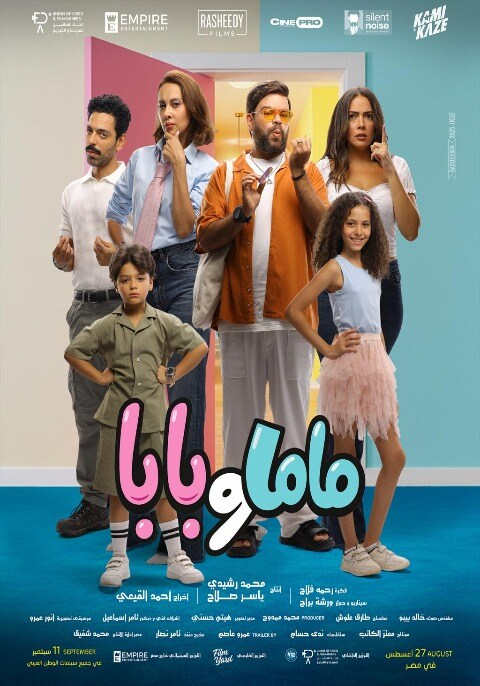
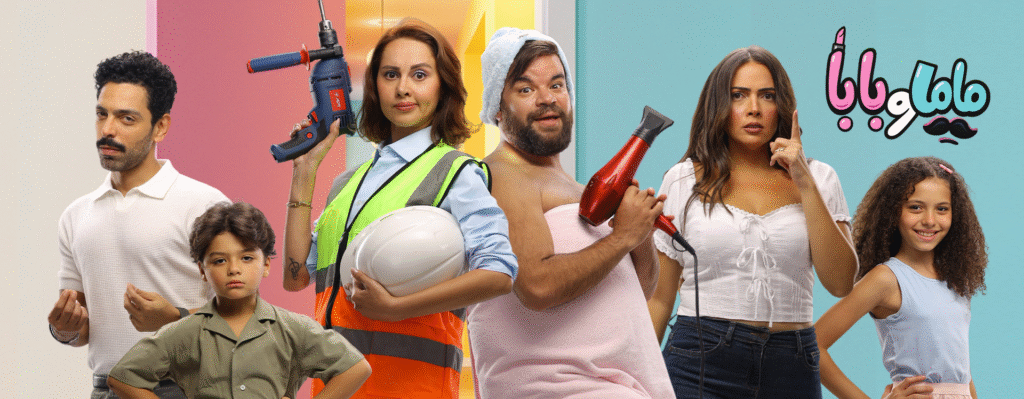
The springs of Egyptian comedy is EVERLASTING!! If you are still holding onto last summers carefree days, the new Egyptian film MAMA WA BABA by Ahmed El Keiy can give you some comedic relief á la freaky freaky Friday. A married couple’s peaceful family life descends into Chaos when they wake up to a “physical role-swap”. The wife transforms into a man and the husband into a woman, which leads them to discover a new aspect of their marital relationship and their roles as parents to two children.
In a heartwarming comedy full of humorous and touching moments, the film follows a married couple facing constant problems and differences in their daily life—just like many others. As tensions rise and they reach the brink of divorce, an unexpected twist turns their world upside down: their souls suddenly switch bodies—the father’s soul enters the mother’s body, and the mother’s soul enters the father’s. This sparks an unconventional and hilarious journey where each is forced to live the other’s life. The father takes over the household and childcare, while the mother faces the pressures of work and external responsibilities. Through this strange experience, they come to appreciate the struggles and sacrifices each one makes. Amid laughter and self-discovery, the couple grows closer and realizes that a successful life together is built on balance and partnership. No one is more important than the other… each has a vital role to play. The film delivers a powerful message wrapped in light-hearted comedy: marriage is not a battlefield—it’s a true partnership.
Cinematic View: EGYPTIAN CINEMAS
10] ‘CAIRO CINEMAS DAYS’ (EGYPT)
In this documentary, Montana films his efforts to renew and restore relationships with his parents and finds a path to historical truths, emotional comprehension, and psychological healing, as he tries to reconstruct how his “political activism has shaped their family”.
If you are in Cairo, and you have had enough of the endless strings of summer comedies, Zawya Cinema’s Cairo Cinema Days, are a refreshing alternative. Their well-curated indie programme brings back old gems like Egyptian Algerian actor and Musician Ahmed Mekky’s The Seventh Sense, where a young gym teacher tries to commit suicide after a series of failures through his life, only to meet a Voodoo man who gives him the power to read minds. Another recommendation is filmmaker and activist Bassam Mortada’s documentary Abo Zabbal 89, which tells the story of the father’s arrest, imprisonment,and torture, reconstructing and reconsidering the experiences that traumatized and divided his family.
Cinematic View: ZAWYA CINEMA CAIRO
